kitchen
Why the Cabinet Under Your Sink Smells Musty
Home Insight Hub is an Amazon Associate and earns from qualifying purchases. Read the full disclosure.
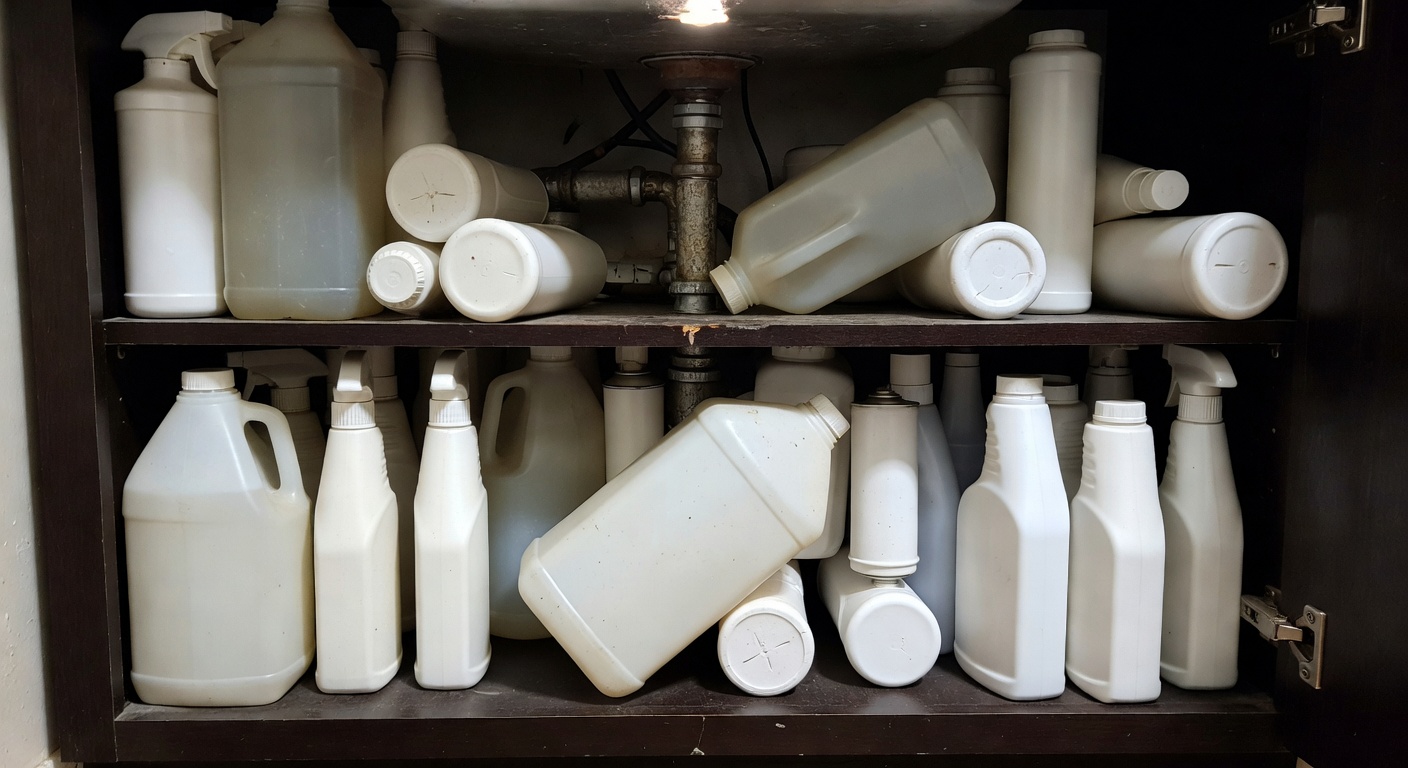
Open the cabinet under the sink and the smell hits first. Damp cardboard. Old sponge. Cleaner bottles. Maybe a faint whiff of mildew that makes you immediately shut the door and pretend this is a problem for Future You.
Future You has suffered enough.
Under-sink cabinets smell musty because they combine every bad storage condition in one box: plumbing, darkness, bad airflow, bottles that sweat or leak, trash bags, damp rags, and a cabinet floor made from material that does not forgive water. Even a tiny drip can sit unnoticed behind a wall of cleaning products until the cabinet starts smelling like a basement with opinions.
The fix is not buying bins first. Bins help after you know what is wet, what is leaking, and what should never have lived under there in the first place.
- Check pipes: supply lines, drain trap, disposal connection, dishwasher hose
- Check cabinet floor: swelling, soft spots, bubbling, dark stains
- Check bottles: loose caps, sticky residue, cracked spray triggers
- Check airflow: packed cabinet with no open space dries slowly
- Check fabric: rags, towels, and sponges do not belong in a closed damp cabinet
First, Empty the Whole Thing
Yes, the whole thing. The under-sink cabinet is not a place you can fix by nudging two bottles to the left. Pull everything onto the floor. Put down a towel if the cabinet is gross. Group items into four piles: keep, relocate, toss, and mystery liquids you need to identify before they become a household incident.
Once the cabinet is empty, use a flashlight. Look at the back corners, the floor around the drain pipe, and the seams where the cabinet floor meets the sides. Run a dry paper towel around the P-trap, supply valves, disposal connection, and any hose entering the cabinet. If the paper towel comes away wet, stop organizing. You have a leak problem, not a storage problem.
Put a dry paper towel under the P-trap overnight. If it has any wet spots in the morning, do not load the cabinet back up yet. Find the drip first.
The Smell Usually Comes From One of Four Places
1. A slow drip
Slow drips are rude because they rarely announce themselves. They soak the back corner, swell the cabinet floor, and hide behind bottles. A drip every few minutes can create enough moisture to keep the cabinet smelling musty without producing an obvious puddle.
Check pipe joints, shutoff valves, the disposal, and the dishwasher hose. If you rent, document the wet area with photos before you report it. If you own, do not wait until the particleboard floor turns into oatmeal.
2. Wet items that should not be stored there
Dish rags, sponges, reusable mop pads, and damp scrub brushes do not belong under the sink unless they are bone dry. Closed cabinets do not dry fabric well. The smell that seems like plumbing may actually be a rag that went in slightly damp and stayed that way. If the sponge itself is the sour one, use the sink-side reset in why kitchen sponges smell after two days before you hide it in this cabinet.
Move washable cloths to a ventilated laundry area. Let scrub brushes dry at the sink before storing them. If the sink area itself is messy, a sink caddy that drains into the basin fixes the problem better than hiding wet tools below.
3. Leaky cleaning bottles
Spray bottles leak around triggers. Dish soap bottles get sticky rings. Dishwasher pods can leave powdery residue. All of that collects on the cabinet floor, traps dust, and starts smelling stale. Pull every bottle out and wipe the bottom before it goes back.
The flaw: most under-sink organizing advice assumes every bottle deserves to stay. It does not. If you have three half-used cleaners for the same job, combine only when the labels say it is safe — otherwise choose one and dispose of the extras properly. Do not create mystery chemistry because the cabinet is crowded.
4. No airflow
A packed cabinet dries slowly. When every inch is filled, a small leak or damp bottle has nowhere to evaporate. The smell lingers because the air never moves.
You do not need a fan under there. You need open space around the pipes, fewer bottles, and storage that lets you pull things out without knocking over half the cabinet.
What Should Actually Live Under the Sink
Keep the under-sink cabinet boring. Boring is good. Boring means you can see leaks.
Good candidates:
- dish soap refills
- dishwasher detergent in a sealed container
- trash bags
- one daily cleaner
- one backup sponge pack, dry and sealed
- small brush or scraper, fully dry
- a removable tray or liner
Bad candidates:
- paper towels directly on the cabinet floor
- open boxes of anything absorbent
- damp rags
- food
- pet treats
- rarely used chemicals
- heavy appliances that block pipe access
If the cleaning supply overflow is the real issue, a two-tier under-sink cabinet organizer can help because it creates pull-out zones around the plumbing instead of one dark pile. Keep the daily bottles reachable without digging, and leave the back corners empty enough to inspect.
The 20-Minute Reset
Set a timer. This does not need to become a cabinet renovation documentary.
- Empty the cabinet completely.
- Check pipes with a dry paper towel.
- Wipe the cabinet floor and sides.
- Throw away empty bottles, broken sprayers, and mystery duplicates.
- Move damp fabric items somewhere ventilated.
- Put down a removable waterproof liner or tray if you have one — a raised-edge silicone under-sink mat is the version that actually traps drips instead of hiding them under adhesive paper.
- Reload only what you use monthly or more.
- Leave visible space around every pipe connection.
If you find swelling, soft wood, black staining, or a persistent leak, stop there. Do not organize around water damage. Fix the water first.
When a Product Helps
A product helps only after the cabinet is dry and leak-free. Pull-out organizers, stackable bins, and waterproof mats are useful because they make the cabinet inspectable. That is the real standard. Not cute. Inspectable.
Look for organizers with enough clearance around the P-trap, removable baskets you can wash, and a footprint that does not block shutoff valves. Skip anything that forces you to cram bottles behind a fixed shelf. The entire point is to see and reach the back of the cabinet without blindly pawing around like you lost a contact lens in there.
If you use refills, keep them upright and grouped. Our CleanCult dish soap refill review gets into the bottle-waste side of that system, but the cabinet rule is simple: refills need a stable zone where they cannot tip and quietly leak into the corner.
Your Next Step This Weekend
Do the paper towel test tonight. Not after you buy organizers. Not after you watch seven videos about acrylic bins. Tonight.
If the towel is dry in the morning, reset the cabinet and reload less than you removed. If the towel is wet, you just caught the problem while it is still small. That is the whole win. Under-sink disasters get expensive when they stay hidden.
Frequently Asked Questions
Why does the cabinet under my sink smell musty but I do not see water? A slow drip, damp rag, leaky bottle, or trapped moisture can create odor without a visible puddle. Use a dry paper towel under pipe joints overnight to catch small leaks.
Should I put baking soda under the sink? Baking soda can absorb odor, but it will not fix moisture. Use it only after you confirm the cabinet is dry and remove the source of the smell.
Can I store paper towels under the sink? Only if they are raised, dry, and protected. Paper towels sitting directly on a cabinet floor can absorb small leaks before you notice them.
What is the best liner for an under-sink cabinet? Use a removable waterproof liner or tray with raised edges — details and size picks live in the silicone under-sink mat guide. Adhesive liners can trap moisture underneath if water gets past the seam.
How often should I check under-sink plumbing? Check monthly, and always after plumbing work, disposal jams, dishwasher changes, or unexplained musty smells.
Full disclosure: As an Amazon Associate, we earn from qualifying purchases. Our recommendations are based on research, review analysis, and real household use only where explicitly noted. Commission rates play no role in what gets recommended — if a simple hardware-store fix beats a branded option, we'll say so.