kitchen
Why Your Kitchen Sponge Smells After Two Days (And the Drying Habit That Stops It)
Home Insight Hub is an Amazon Associate and earns from qualifying purchases. Read the full disclosure.
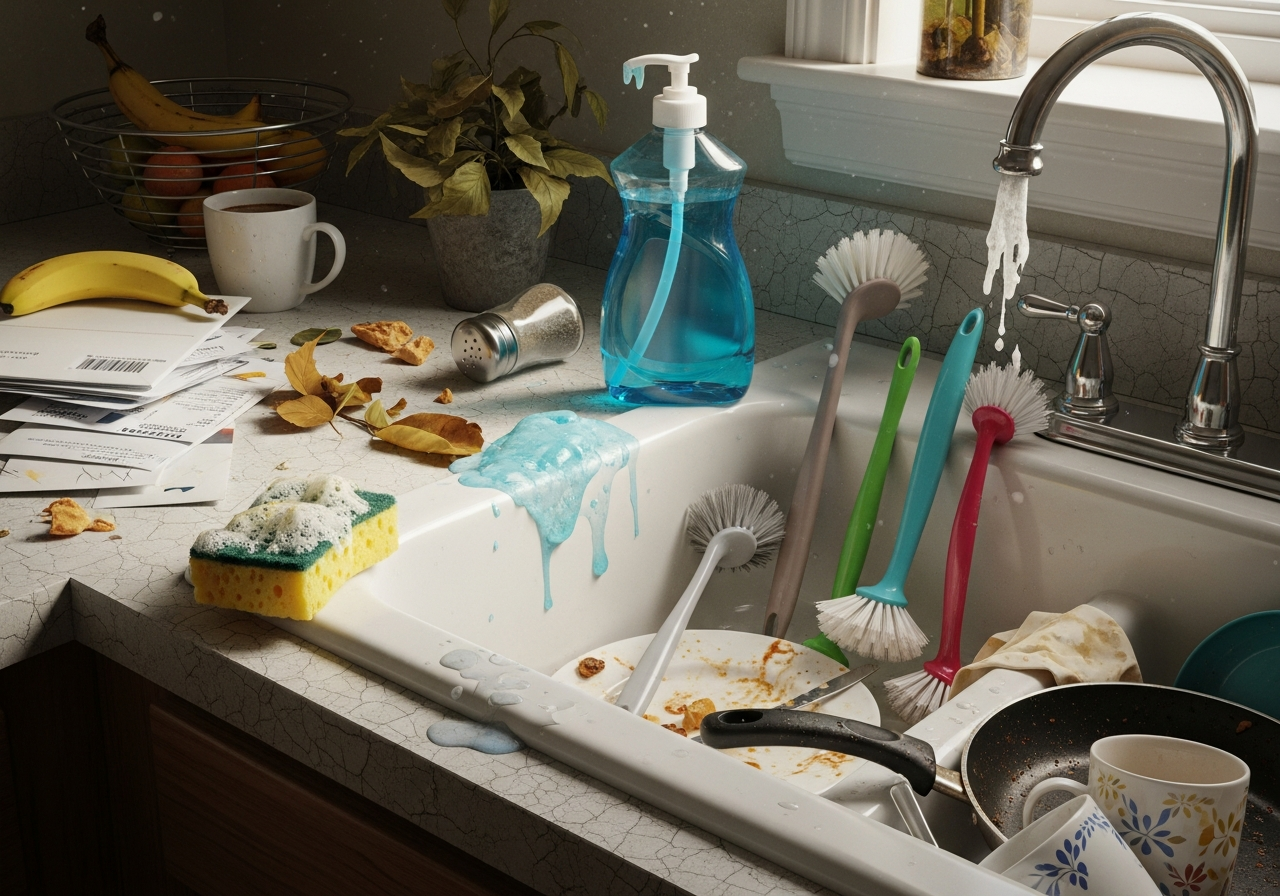
You wring the sponge, drop it by the faucet, and walk away. Next morning it smells like a gym sock that learned how to do dishes. The sink looks fine. The soap is fine. The sponge is the whole problem, and it started overnight.
This is not a mysterious kitchen curse. A dish sponge is a wet, food-soaked foam brick. If it stays flat in a puddle, it never dries. The sour smell is leftover food film plus standing water. Fix the drying, and most of the smell goes with it. Keep hiding a wet sponge under the sink and you just move the funk to a darker box.
- Rinse first: leftover food in the foam is what turns sour
- Wring hard: a damp brick dries slowly; a squeezed sponge dries overnight
- Stand it up: on edge or in a draining holder, never flat in a puddle
- Keep it out of the cabinet: closed air under the sink does not dry foam
- Replace when it stays slimy: a reset should work; a permanent smell means the sponge is done
The Smell Is Trapped Food Plus Trapped Water
A kitchen sponge does two jobs at once. It scrubs. It also stores whatever you just scrubbed. Sauce film, dish soap, and rinse water sit in thousands of tiny holes. Leave that wet stack on the counter and the sponge stays warm, dark, and damp — the same conditions that make a dish rag smell if you wad it up in the sink.
The consensus among people who actually wash dishes every night is blunt: the sponge that lives face-down in a soap ring is the one that smells by Tuesday. Rinse it until the water runs clear, squeeze it like you mean it, then give both sides air. That is the whole system.
The flaw: drying habits help a current sponge. They do not resurrect one that is already torn, slimy, or sour after a full reset. At that point you are negotiating with foam.
Tonight, rinse the sponge under hot water until it stops shedding food bits. Twist it hard. Stand it on its thin edge, rough side out, somewhere it can drip into the basin. If tomorrow morning it smells closer to nothing, the problem was water, not the brand.
What Usually Makes It Worse
1. The sponge never leaves the puddle
Flat on the counter, it sits in its own runoff. A plastic tray without a drain does the same thing with extra steps: now you have a wet sponge and a tray to dump. If the counter stays ringed and grimy, the sponge is drying in yesterday’s water.
A self-draining sink caddy only helps when the spout actually points into the basin. A holder that traps a puddle under the sponge is decor.
2. You stash it under the sink while it is still damp
Closed cabinets do not dry foam. A slightly wet sponge in the dark is a reliable way to make the whole cabinet smell like the sponge. If the odor hits when you open that door, start with why under-sink cabinets smell musty and keep used sponges out of there until they are bone dry. Backup packs can live under the sink. Used ones cannot.
3. Soap film never gets rinsed out
A sponge that still feels slick after you “rinsed” it is holding food and detergent. That film is what turns sour. Rinse until the squeeze water looks clear, not milky.
4. You keep a sponge that already lost
Tears, a permanent slimy feel, black or pink staining that does not rinse out, or a smell that comes back the same day you reset it: that sponge is finished. NSF’s consumer cleaning guidance is to replace kitchen sponges about every two weeks, or sooner when they stay dirty. Daily-use foam rarely gets a heroic third month.
The Five-Minute Reset
Do this before you throw the whole pack away:
- Rinse both faces under hot running water.
- Squeeze until almost no water comes out.
- Wash it with a drop of dish soap if it still feels greasy, then rinse again.
- Stand it on edge in moving air, not in a closed cup.
- Smell it in the morning before it touches a plate.
If the morning smell is gone, keep the drying habit. If it comes back by dinner, replace the sponge. Do not keep “sanitizing” a worn-out brick and calling it a system.
Microwave and Dishwasher Notes — Without the Internet Theater
Public lab writeups are more useful than the comment-section daredevil tips. A USDA Agricultural Research Service comparison found that heating a wet sponge in the microwave, or running it through a dishwasher with a drying cycle, cut microbes on test sponges more than a short bleach or lemon soak. NSF’s consumer page also points to a wet-sponge microwave cycle and frequent replacement.
That is lab and consumer-lab consensus, not a reason to treat your sponge like a science fair.
Use those methods only with the boring caveats:
- The sponge has to be wet. A dry sponge in a microwave is a fire risk.
- No metal scrubbers, no steel wool, no sponges with a metal strip.
- Follow your microwave and dishwasher manuals. If the sponge starts smoking, stop.
- Bleach soaks are a weaker reset in that USDA comparison and they leave you with a chemical-smelling wet brick you still have to rinse and dry.
A reset is optional. Drying is not. A clean-ish sponge that stays wet will smell again.
When a Different Tool Is the Real Fix
Some kitchens do not need a better sponge ritual. They need a tool that dries faster than foam.
Swedish cellulose dishcloths hang or stand and usually dry before the next meal. They still smell if you leave them wadded in the sink. They just give you less swamp to manage. A dedicated dish brush with an open handle dries faster than a sponge for pans. Keep one sponge for the sink basin if you want, and stop using that same sponge as a counter rag, a floor spot-cleaner, and a pet-bowl mop.
If the sink edge itself is the swamp — soap ring, brush, sponge, all in one puddle — fix the landing zone. Drainage beats another multipack.
Your Next Step This Weekend
Do not buy a new caddy until you test the current sponge. Friday night: rinse, wring, stand it on edge. Saturday morning: smell it. If it is fine, keep that habit and get the sponge out of any tray that holds water. If it is still sour, throw that sponge out and start the next one on the edge from hour one.
The goal is simple. The sponge should be dry to the touch before you use it again. If it is still cold and heavy, it is still wet. Wet is the smell.
Frequently Asked Questions
Why does my kitchen sponge smell after only a day or two? Food film and rinse water stay in the foam. If the sponge lies flat in a puddle, it never dries, and the sour smell shows up fast.
Does standing a sponge on its edge actually help? Yes. An edge-standing sponge has more airflow and less of its surface sitting in runoff. People who wash dishes daily keep landing on this same habit.
Can I put a kitchen sponge in the microwave? Only if it is fully wet and has no metal. USDA ARS testing found microwave heat reduced microbes on wet test sponges more than a short bleach soak. A dry sponge can scorch or catch fire. When in doubt, skip the microwave and use the dishwasher drying cycle or just replace the sponge.
How often should I replace a dish sponge? NSF consumer guidance is about every two weeks, or sooner if it stays slimy, tears, or smells after a full rinse-and-dry reset.
Should I store sponges under the sink? Only unused, dry backups in a sealed pack. A damp used sponge under the sink is a common reason the whole cabinet smells musty.
Full disclosure: As an Amazon Associate, we earn from qualifying purchases. Our recommendations are based on research, review analysis, and real household use only where explicitly noted. Commission rates play no role in what gets recommended — if a simple hardware-store fix beats a branded option, we'll say so.