smart home
A Button Will Not Cut Power to a Lamp
Home Insight Hub is an Amazon Associate and earns from qualifying purchases. Read the full disclosure.
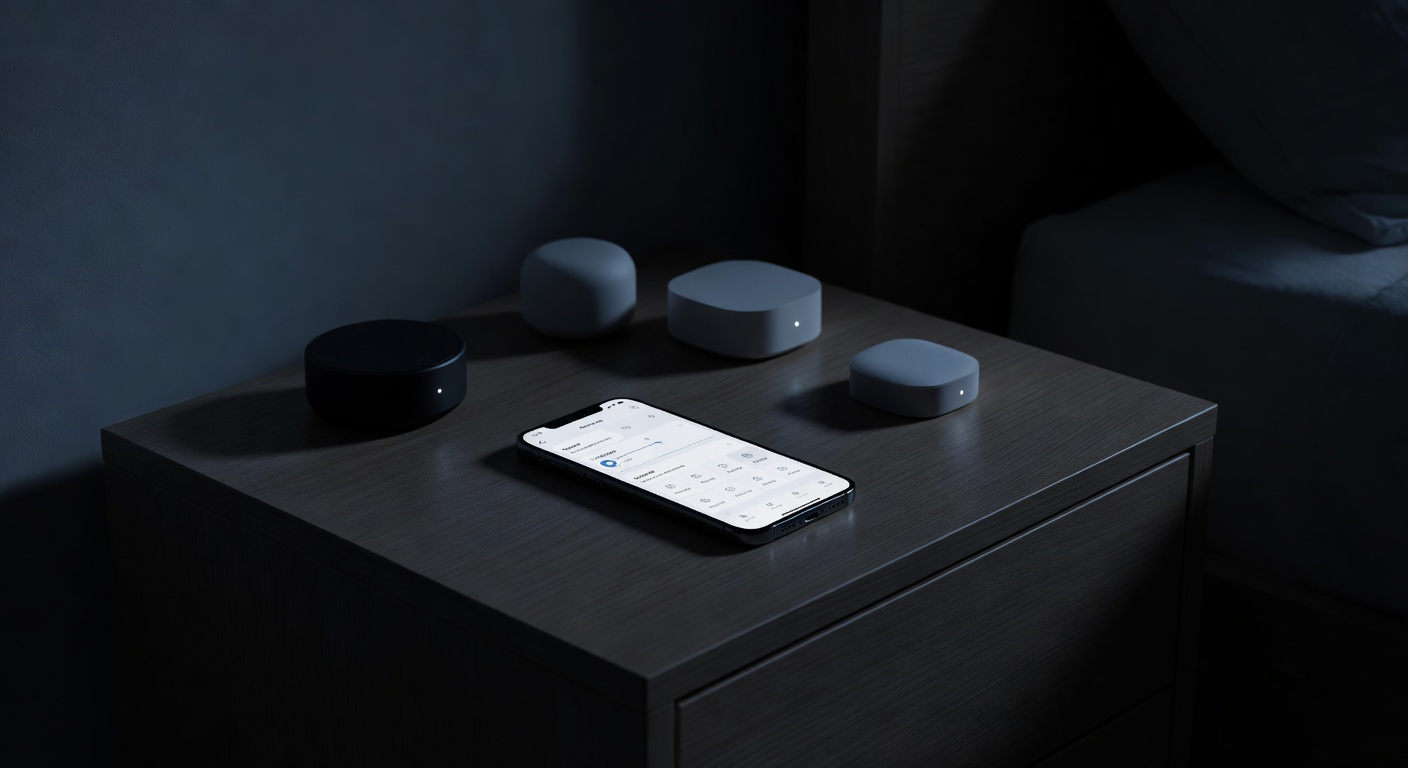
The lamp is still on. A guest says the wake word three times. The TV answers. They yank the cord, or they leave the lights on. A button on the wall fixes the person who will not learn an app. A plug in the outlet fixes the lamp you keep walking back to turn off. Those are different jobs. Buy the wrong one and you still have a lit room, or you have a clicker that does not cut power to anything.
- A guest, a kid, or a parent will not use voice or an app: the button.
- You want the lamp, fan, or coffee maker off without crossing the room: the plug.
- Thick walls, and the phone is not home: the button pack alone is not enough. The review says you need the separate hub.
- A space heater or another high-draw heat load: neither. That is the wrong category.
Tonight, name the device that is still on when you are already in bed. If it is one lamp with a cord, you need a plug. If the person who turns lights off will never open an app, you need a button, and the button still has to talk to something that can cut power or change a bulb.
A Button Is a Press, Not an Outlet
The flaw: Flic range is Bluetooth, about 30 feet in line of sight. Walls eat that. Thick plaster or a couple of interior walls can drop reliable range to 15–20 feet. The buttons work without the Flic Hub only if your phone is home and nearby. Full use across thick walls, or when the phone is gone, means a separate hub. Pairing can be fussy, especially with HomeKit. A press is not a sub-second light switch.
The Flic 3-pack is three adhesive Bluetooth buttons. No drill. Each button has three actions: single press, double press, and hold. A CR2032 is rated 2+ years. Stick one by the bedroom door for “lights off.” That is the product. It does not sit in the outlet. It does not meter watts. It tells some other device to do the job, and only if that device is in range or the hub is bridging it.
Use it when the failure is a person, not a cord. The mother-in-law, the kid, the guest who will yank a plug out of the wall because there is no switch they trust.
When someone will not learn the app
3-pack. Adhesive. About 30 feet of Bluetooth. The hub is a separate buy if the walls are thick.
Check if the Flic Smart Buttons are currently in stock on AmazonThe longer notes are in the Flic smart button review.
A Plug Cuts the Cord
The flaw: The Kasa Matter mini only joins 2.4GHz Wi-Fi. A combined-band router can fail the first pairing. Split the bands or try again. Energy monitoring is there, and it is basic. You get consumption, not a long history chart. It is a 15A / 1800W max load. That is not permission to run a space heater on it.
The Kasa is a 2-pack of compact plugs. Matter, so Alexa, Apple Home, Google Home, and SmartThings do not need a separate hub for the plug itself. The body leaves the second outlet free. You schedule the lamp, the fan, or the coffee maker, or you tell the speaker to cut it. That is the job a button cannot do alone.
It will not help the guest who will not speak to the speaker. There is no adhesive clicker in the box. If that person is the reason the lights stay on, the plug is the power side and you still need a press they will actually use.
When the lamp has a cord
Matter 2-pack. No hub for the plug. 2.4GHz only. First pairing can take a second try.
Check if the Kasa Matter Smart Plug is currently in stock on AmazonThe outlet version is the Kasa Matter mini plug review.
Which One to Buy
| Tonight’s failure | Buy |
|---|---|
| A person will not use voice or an app | Flic button, and something for it to control |
| One lamp, fan, or coffee maker should die on a schedule | Kasa plug |
| Thick walls and the phone leaves the house | Button plus the separate hub, or skip the button |
| The load is a heater | Neither |
Do not buy the button because the listing says it works with lights, then discover nothing can receive the press. A button without a plug, a bulb, or a hub is a sticker. If you only have one Saturday and the lamp has a cord, buy the plug first.
What Neither One Does
Neither one replaces a wall switch you already trust. If someone flips that switch off, a smart plug and a smart bulb both go dead. Leave the fixture powered. Plug-versus-bulb notes are on the smart home hub.
Neither one belongs on a high-draw heater. A 15A rating is a ceiling, not a suggestion to run heat through the plug.
Frequently Asked Questions
Is a smart button better than a smart plug?
Only if the problem is a person who will not use an app or a wake word. The Flic 3-pack is an adhesive Bluetooth press. The Kasa plug cuts power to a lamp. A button does not sit in the outlet. A plug does not give a guest a wall clicker.
Do I need the Flic Hub?
If the walls are thick, or the phone is not home, yes. The review says the buttons alone talk to the phone over Bluetooth, about 30 feet in the open and less through walls. The hub is a separate device.
Does the Kasa plug need a hub?
Not for Alexa, Apple Home, Google Home, or SmartThings. It does need 2.4GHz Wi-Fi, and the first pairing can fail on a combined-band router.
Can I use the button without a plug?
Only if something else can take the command, such as a smart bulb that is already powered. If the lamp is a dumb bulb on a cord, the button has nothing to cut until a plug or a bulb is in the path.
Your Next Step This Weekend
Name the thing that is still on. If it is one lamp and you are the person who forgets it, the Kasa plug is the buy. If a guest is the person who cannot turn it off, the Flic button is the press, and it still needs a plug or a bulb to receive it. If the load is a heater, buy neither.
Full disclosure: As an Amazon Associate, we earn from qualifying purchases. Our recommendations are based on research, review analysis, and real household use only where explicitly noted. Commission rates play no role in what gets recommended — if a simple hardware-store fix beats a branded option, we'll say so.