kitchen
Why Glass Food Storage Lids Get Moldy (and How to Stop It)
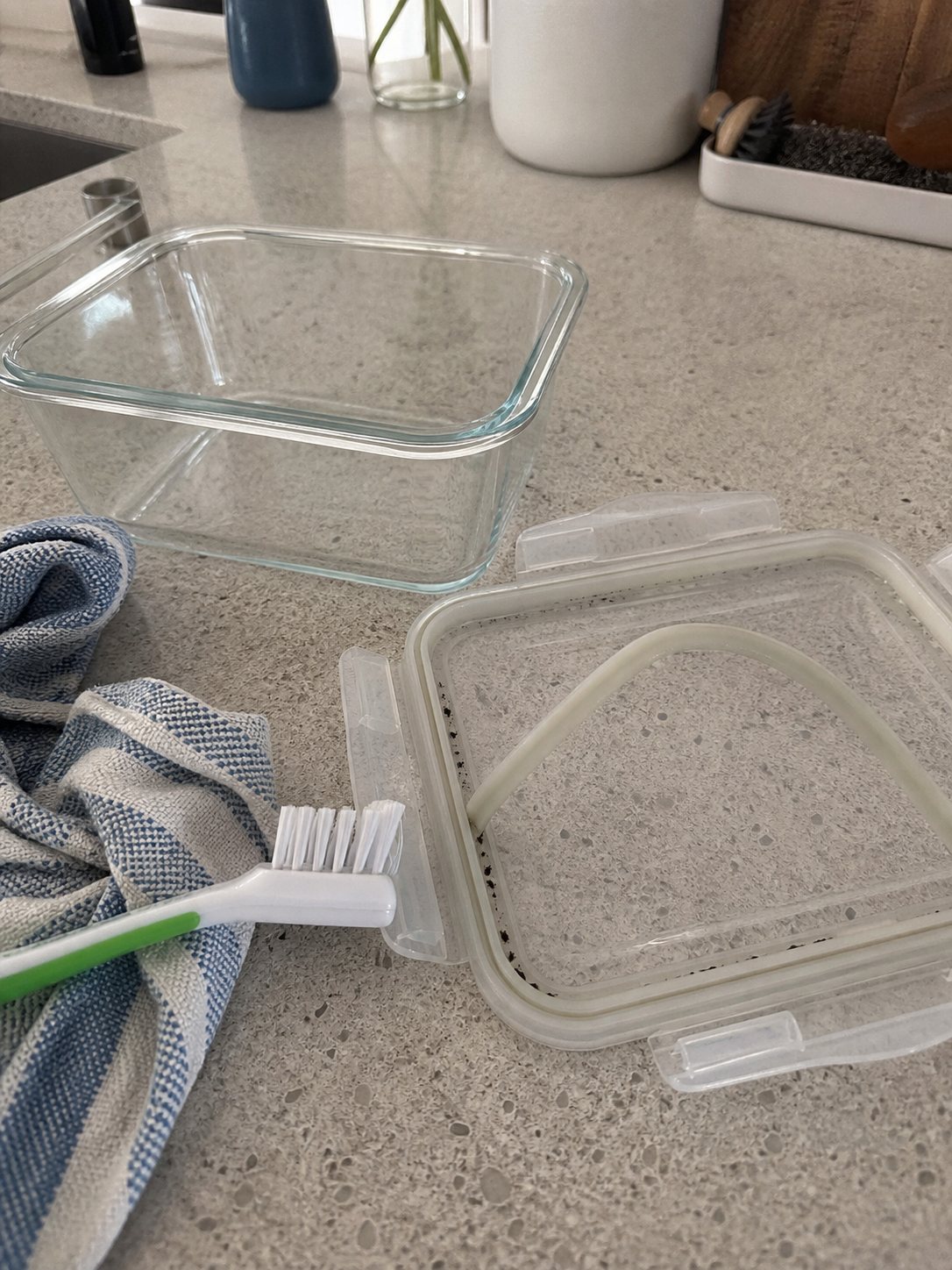
You pulled a clean glass container from the cabinet, snapped off the lid, and got that damp basement smell. The bowl looks fine. The leftover chili is long gone. But the lid? The lid smells like it spent a weekend sealed inside a gym bag.
This is the part people miss when they search for mold in glass Tupperware-style containers: glass usually is not the problem. The lid is. More specifically, the little gasket groove, latch seam, vent tab, or rim channel that traps one bead of water after the dishwasher stops.
One bead does not sound dramatic. But seal that bead inside a dark cabinet with a stack of nested lids, and you have built a tiny humid apartment for stink. No security deposit required.
- Glass bowl smells: usually leftover food film, not the glass itself
- Lid smells musty: trapped moisture in gasket grooves or latch seams
- Black dots in a removable gasket: clean the gasket separately and inspect it closely
- Smell returns after cleaning: the lid may be too worn, scratched, or warped
- Fastest prevention: dry lids upright before stacking them
Start With the Lid, Not the Glass
Glass is smooth and nonporous compared with plastic. It does not hold tomato oil, garlic smell, or curry pigment the same way a scratched plastic tub does. That is why a glass bowl can look spotless and still seem guilty: the smell travels from the lid when you store the two together.
Take the lid off and smell the bowl by itself. Then smell the lid rim. If the odor jumps out at the rim, you have your culprit.
Look for these moisture traps:
- silicone gasket channels
- snap-lock latch hinges
- steam vents
- raised logo areas
- little corners where the lid lip wraps around the glass
- scratches from knives, forks, or aggressive scrubbing pads
If the bowl is plastic instead of glass, start with why plastic food containers smell even after washing. Plastic has its own weird little talent for holding oil and odor. Glass is the easier material. The lid just refuses to behave.
The Five-Minute Cleaning Sequence
Do this before you replace anything:
- Separate the glass bowl and lid.
- Remove the gasket only if the lid was designed for it. Do not pry out a sealed gasket with a knife.
- Wash the lid with warm water, dish soap, and a soft brush.
- Scrub the gasket groove or rim channel with an old toothbrush.
- Rinse well, then dry the lid upright with airflow on both sides.
A soft brush matters. Steel wool and rough scrub pads can scratch plastic lid surfaces and give residue more places to sit. You are trying to clean the groove, not sand the lid into retirement.
If the rim still smells after a normal wash, slow down and clean the seal itself. The step-by-step guide to cleaning food storage lid gaskets covers removable seals, fixed gasket channels, and the point where scrubbing stops being worth it.
For one week, store every lid standing upright instead of nested flat. If the smell improves, your problem was trapped moisture, not the container set.
When Baking Soda Helps
Baking soda helps with odors sitting on the surface. It does not magically reverse a warped lid or a gasket that has absorbed months of old sauce smell, but it can rescue lids that just need a reset.
Make a paste with baking soda and a few drops of water. Rub it into the gasket groove and lid rim with your fingers or a soft brush. Let it sit for 10 to 15 minutes, then rinse thoroughly and dry the lid upright.
For stubborn odors, leave the dry lid in an open spot overnight with a small dish of baking soda nearby. Do not seal baking soda inside a damp container and call it a system. That just adds powder to the swamp.
The Dishwasher Habit That Causes the Problem
The dishwasher gets blamed because the lid smells after a cycle. The more likely issue is what happens after the cycle.
Dishwashers leave water in horizontal surfaces. Lids are basically tiny obstacle courses: grooves, clips, ridges, and channels everywhere. If you unload them while they are still damp and stack them flat, the water gets trapped exactly where air cannot reach it.
Better habit:
- put lids on the top rack when the manufacturer allows it
- angle them so water runs off instead of pooling
- shake out the gasket groove after unloading
- stand lids upright on a towel or drying rack for at least an hour
- stack only when fully dry
This is annoying in the same way flossing is annoying: tiny habit, outsized consequences, very easy to skip until something smells suspicious.
When the Lid Is Done
Some lids are not worth saving. If the gasket has visible dark staining that does not clean out, the latch no longer closes tightly, or the rim stays musty after repeated cleaning and full drying, retire the lid from food storage.
You can still use the glass bowl for dry pantry odds and ends if it has a loose cover, but do not keep using a bad lid for saucy leftovers and pretend future-you will enjoy opening it. Future-you has enough problems.
The flaw: glass containers solve staining and bowl odors, but the lid design still decides how much maintenance you inherit. A tight gasket is great for soup in a lunch bag and annoying when the groove never dries.
This is where a good set matters. The glass portion can last for years, but the lid design decides whether you will keep using it. Our guide to glass food storage containers that stop leftover smells walks through the trade-off: better seals prevent leaks, but every seal also needs cleaning and drying.
Glass, Plastic, or Silicone: Which One Gets Weird First?
Glass is the least likely to hold odor. Plastic is the most likely, especially once it gets scratched or heated with oily food. Silicone sits in the middle: flexible and durable, but onion, garlic, tomato, and turmeric can linger if you seal them in too long.
That does not make one material universally better. It makes each one better at different jobs.
Use glass for saucy leftovers, reheating, and food you want to see clearly in the fridge. Use plastic for dry snacks and low-stakes fridge storage. Use silicone when flexibility matters more than rigid stacking. If your real issue is disposable bags taking over the drawer, reusable silicone storage bags solve a different version of the food-storage mess.
The Cabinet Reset
Pull the whole stack out and do one boring but useful reset:
- match every bowl with a lid
- wash any lid that smells even faintly musty
- dry everything upright
- separate daily-use containers from random leftovers from three container sets ago
- retire lids that no longer seal
- stop nesting damp lids flat
You do not need a perfect matching system. You need to open a container and smell nothing. That is the entire luxury experience.
Your Next Step This Weekend
Take the three lids you use most and clean only the rim and gasket areas. Dry them upright overnight. Tomorrow morning, smell the lid before you put it back on the glass.
If the smell is gone, you fixed the routine. If it comes back after one or two uses, the lid is the problem. Not your dishwasher. Not your dish soap. The lid.
Frequently Asked Questions
Can glass food storage containers grow mold?
Food residue can grow mold on any container surface if it sits long enough, but clean glass itself does not hold odor the way scratched plastic does. With glass containers, the lid rim or gasket is usually the place that traps moisture and smell.
Why does my glass container smell musty after the dishwasher?
The lid probably trapped water in a gasket groove, latch seam, or rim channel. Drying lids upright before stacking them usually fixes the musty cabinet smell.
Should I remove the silicone gasket to clean it?
Only remove it if the manufacturer designed it to come out. If it does come out, wash it separately with dish soap and a soft brush, then let it dry fully before putting it back.
When should I replace a food storage lid?
Replace or retire it from food use when the gasket stays stained or smelly after cleaning, the lid is warped, or the latch no longer seals tightly.