kitchen
Leftovers Stain the Bowl. The Lid Is What Smells.
Home Insight Hub is an Amazon Associate and earns from qualifying purchases. Read the full disclosure.
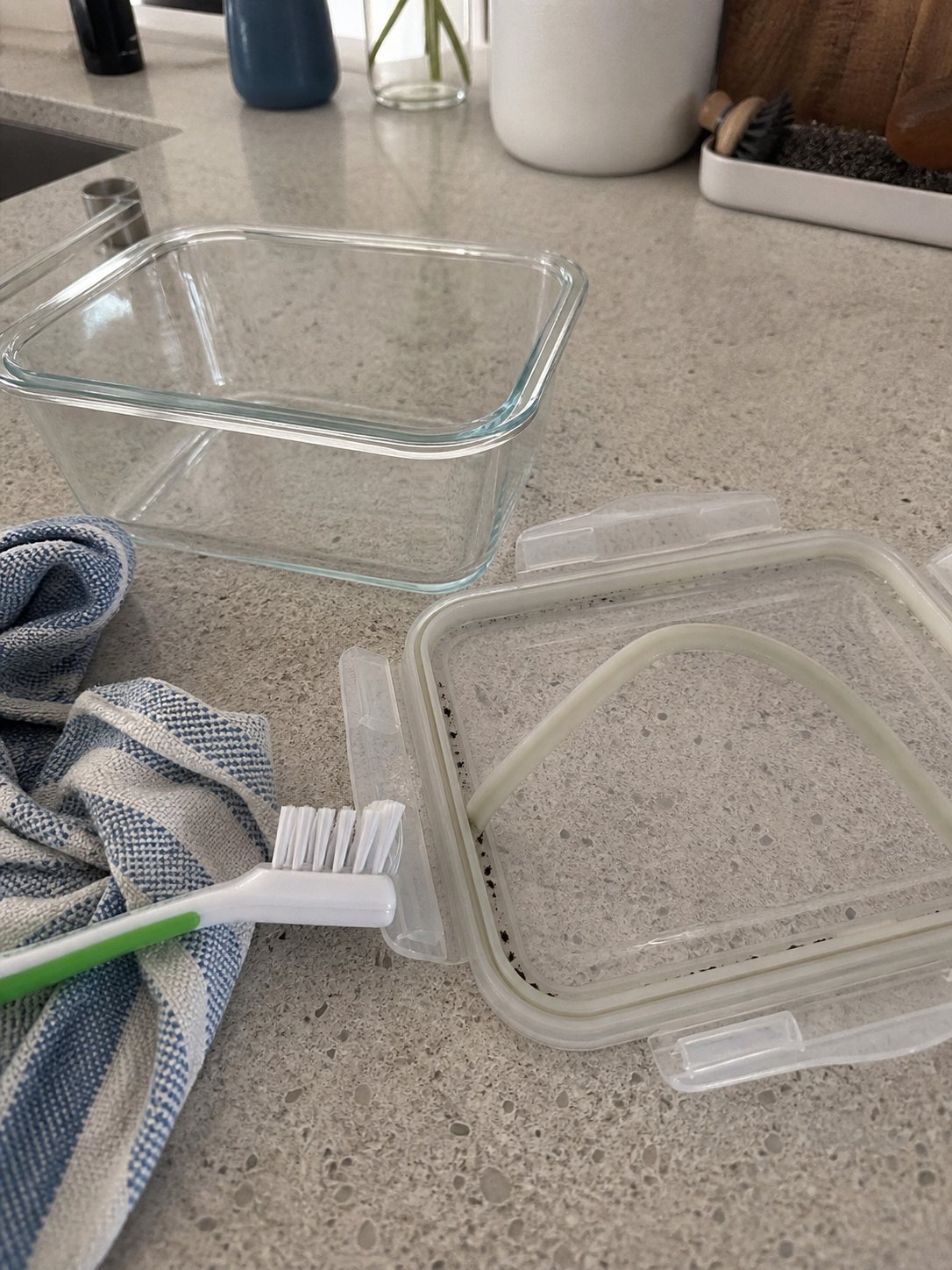
You open a “clean” container and get last Tuesday’s garlic chicken. The bowl looks fine. The smell does not. Plastic held the sauce. Glass moved the problem to the lid. A silicone bag can tint orange and still leak if the pinch-loc never seated.
Those are three different failures. Buying one set to fix all of them is how the drawer fills up with lids that match nothing.
- Sauce stain or oily smell in the bowl: glass base, not another plastic tub
- Musty lid, clean bowl: gasket groove and drying habit, not a new material
- Odd shape, freezer flat, or a bag that has to bend: silicone, and the seal is the flaw
- Cereal, flour, open snack bags: not a leftover container at all
- Food that vanishes at the back of the fridge: a reach problem, not a lid problem
Plastic Holds the Stain. That Part Is the Material.
Tomato sauce brings acid, oil, and red pigment. Hot food softens cheap plastic just enough for that pigment to sit in scratches. The container can feel clean and still smell like spaghetti. Scrubbing harder does not change the material.
Our plastic-container guide already lands there: once the smell returns after a normal wash, stop treating that tub as a forever leftover bowl. Dry snacks and a short fridge stay are a different use. Sauce overnight is the use that stains.
Glass does not do that job the same way. The leakproof glass set review is about Rubbermaid Brilliance bases that resist stains and odors, with clear Tritan lids and locking side latches meant to keep soup in a bag. The flaw: those plastic latch hinges can crack after months on the dishwasher bottom rack. Glass solved the bowl. It did not make the lid immortal.
When the bowl is the thing that stains
Glass bases for sauce and reheating. Take the lid off before the oven, and do not park the latches on the bottom rack.
Check if the Rubbermaid Brilliance glass set is currently in stock on AmazonThe Lid Smells Because It Trapped Water
A spotless glass bowl can still smell musty. Smell the bowl alone, then the rim. If the odor jumps at the gasket, latch seam, or vent tab, the glass is not the culprit. One bead of water in a dark cabinet is enough.
That is the whole mold-lid problem, and it survives a material swap if you nest damp lids. Silicone does not get you out of drying. A bag stuffed wet into a drawer grows the same funk, just in a flatter shape.
For one week, dry every lid and every bag upright before it goes back in the cabinet. If the smell fades, you did not need a new set. You needed airflow.
If the smell stays in a removable seal after that week, the gasket is the worn part. Cleaning the groove is a different guide from buying a new bowl. Do not pry a fixed seal out with a knife. That is how a lid starts leaking on purpose.
Silicone Wins When the Leftover Is Not Bowl-Shaped
A rigid glass rectangle is a bad fit for a half sandwich, a freezer-flat portion of soup, or anything you want to press the air out of. That is the bag job.
The Stasher silicone bags review covers a 4-pack: Stand-Up Mid, Half Gallon, Sandwich, and Snack. Platinum silicone, no BPA, no PVC, no latex, and the listing rates them for freezer, microwave, dishwasher, and oven up to 400°F. The flaw that review already names is the one that matters here. The pinch-loc seal is not a zip. Reviewers struggle the first week. Seat it wrong and the bag leaks. Tomato, curry, and turmeric can tint the silicone orange. The tint does not mean the bag failed as a seal. It does mean “clear” is a temporary description if you live on sauce.
Glass still wins the sauce bowl. Silicone wins the shape glass cannot make. Neither one is a ziplock you can mash shut with one hand and forget.
When the leftover will not sit in a rectangle
Silicone bags for freezer flats and odd shapes. The pinch-loc is the flaw. Sauce can tint the bag.
Check if the Stasher silicone bag 4-pack is currently in stock on AmazonDry Goods Are Not Leftovers
An open cereal bag and a container of chili are not the same mess. Chili needs a bowl that will not stain and a lid you actually dry. Cereal needs a canister you scoop from, with a lid you hand-wash.
The 24-piece airtight pantry set is that dry-goods job: clear plastic, mixed sizes, locking lids, meant for cereal, flour, sugar, pasta, and snacks you decant. The listing says the bases are dishwasher-safe and the lids are not. Bottom-rack heat warps the seal. Do not buy it to fix tomato sauce. It will do the plastic-stain thing you were trying to leave.
If the snack is still in its bag and the problem is that you cannot see it, skip decanting. The clear stackable pantry bins are a 6-pack of medium bins, about 10 by 6 by 5 inches, polyethylene, hand-wash only, and not a seal for leftovers. They pull a group of packages forward. They do not replace a gasket.
The Food Did Not Smell. It Disappeared.
Sometimes the container is fine and the leftover still becomes science. The back of a fridge shelf is a dark 18 to 24 inches. Whatever you shoved there last Sunday is now a guessing game.
A rolling fridge caddy pulls that back row forward. It is 2.3 inches tall, so tall condiment bottles will not fit under the dividers, and the wheels can wobble on uneven wire shelves. It does not stop a lid from molding. It stops a decent container from living where you cannot see it.
What to Buy for the Smell You Actually Have
Match the failure, then stop.
Sauce stain or oily smell in the bowl: glass, and keep the latches off the bottom rack. Musty rim on an otherwise clean bowl: dry the lid, then clean or retire the gasket. Half a sandwich, a freezer flat, or a shape that will not sit in a rectangle: silicone, and practice the pinch-loc before you trust it with soup in a bag. Open flour and cereal: the airtight set, lids hand-washed. Packages you refuse to decant: clear bins. Food that vanishes behind the milk: the short rolling caddy, not another container brand.
One set will not cover that list. The drawer of orphan lids is what you get when you pretend it will.
Your Next Step This Weekend
Pull three leftovers containers. Smell the bowl, then the lid, separately. If only the lid smells, dry every lid upright tonight and leave the new-set tab closed. If the bowl still smells like sauce after a normal wash, that piece is done as a leftover bowl.
Buy the glass set for the sauce job or the silicone bags for the shape job. Do not buy both on the same Saturday unless you enjoy a cabinet full of systems you have not learned yet.
Frequently Asked Questions
Do silicone bags smell less than glass containers?
No. They fail differently. Glass bowls do not hold tomato pigment the way plastic does, but the lid gasket can trap moisture and smell musty. Silicone can tint from sauce and still leak if the pinch-loc is not seated. Dry both before you blame the material.
Should I switch to glass if my plastic containers stain?
Yes, for sauce and oily leftovers. The glass review we already published is about stain-resistant bases and locking Tritan lids. The latch hinges can crack if they live on the dishwasher bottom rack. Glass does not fix a lid you stack while it is wet.
Are silicone bags better for the freezer?
They are the better shape for a flat portion. The Stasher review lists freezer, microwave, dishwasher, and oven use up to 400°F, in four sizes. The seal is a pinch, not a zip. Seat it before you trust a liquid.
Will an airtight pantry set stop leftover smell?
No. That 24-piece set is for cereal, flour, and other dry goods. The lids are not dishwasher-safe. Sauce leftovers belong in glass or a properly sealed silicone bag, not in a flour canister.
What if the container is fine and the food still goes bad?
Then the container was not the failure. A 2.3-inch rolling caddy brings the back of the fridge shelf forward. It will not fit tall bottles, and it will not dry a lid.
Full disclosure: As an Amazon Associate, we earn from qualifying purchases. Our recommendations are based on research, review analysis, and real household use only where explicitly noted. Commission rates play no role in what gets recommended — if a simple hardware-store fix beats a branded option, we'll say so.