garage
Pegboard Failed You. Here's What Garage Walls Are Actually For.
Home Insight Hub is an Amazon Associate and earns from qualifying purchases. Read the full disclosure.
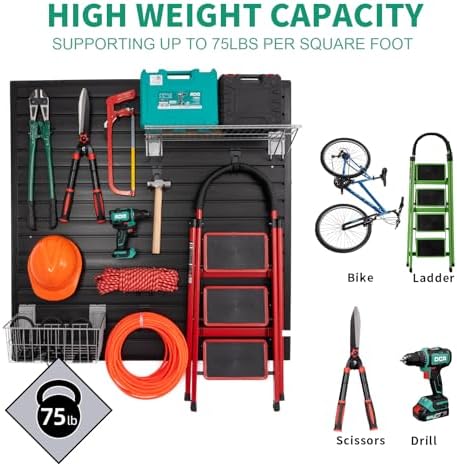
FRAYSCENT Slatwall Panels (4×8ft PVC) — heavy-duty moisture-resistant PVC panels that mount to garage studs and accept any standard slatwall accessory, so you get a fully reconfigurable tool wall where hooks lock in rather than falling out. Fair warning: the panels are heavy and genuinely require two people to install level; with only 114 reviews it's an earlier-adopter pick without a long track record yet. But for the price, nothing else comes close.
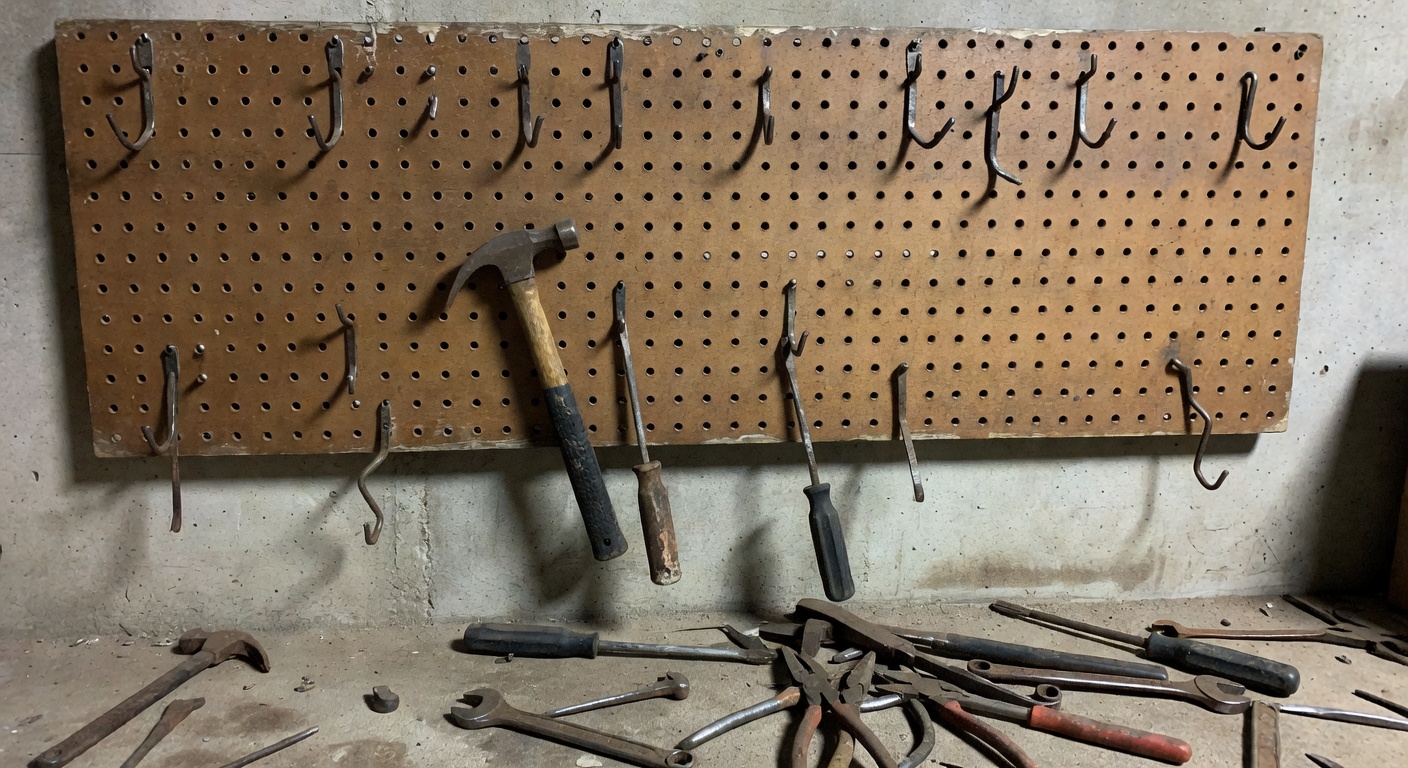
You installed pegboard once. You were optimistic. You bought the hooks, organized your tools by size, stood back, admired it for about a week — and then one morning you picked up the hammer and the hook came with it, swinging mid-air, and took three other hooks down on its way. The holes are 3/16 of an inch. The hooks wiggle. Anything over about two pounds starts testing the structural integrity of the whole setup.
Pegboard is fine for craft rooms. It is not fine for garages where you’re hanging a 4-pound circular saw, a heavy-duty extension cord reel, or anything with actual mass. Garage walls work harder than that.
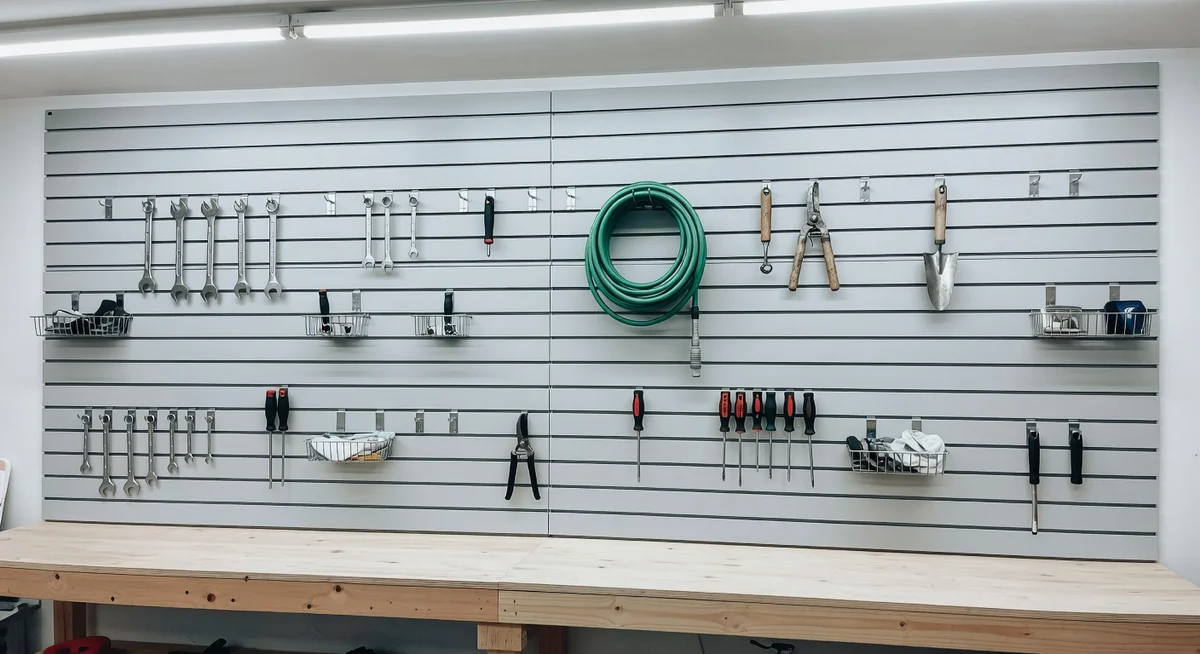
Slatwall is what retail stores and tool shops use. Horizontal grooves every couple of inches, and accessories that lock into those grooves with a lip rather than balancing on a hook through a 3/16-inch hole. The difference in holding strength is not subtle. And PVC slatwall specifically doesn’t dent, doesn’t rust, and doesn’t absorb oil the way MDF versions do.
What PVC Slatwall Actually Does That Pegboard Doesn’t
FRAYSCENT’s 4×8ft slatwall panels are made from heavy-duty PVC — not the cheap hollow MDF slatwall you’ll find in some retail display fixtures. PVC handles the moisture and temperature swings of an unheated garage without warping. It’s paintable if you want the wall to match your garage aesthetic. And it accepts the full ecosystem of standard slatwall accessories: bins, hooks, bike mounts, shelf brackets, tool holders — anything designed to the universal slatwall groove standard.
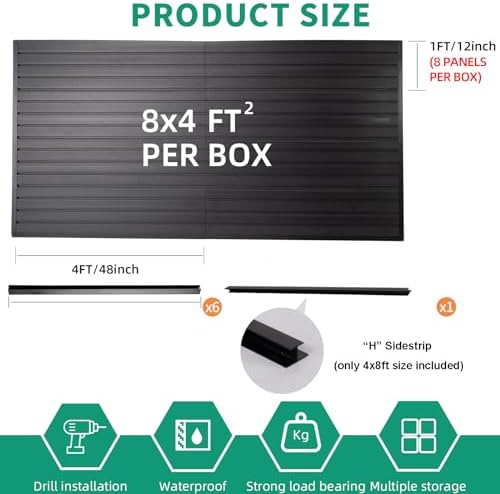
- Panel size: 4×8ft (48×96 inches) per panel
- Material: Heavy-duty PVC — moisture and impact resistant
- Compatible: Standard slatwall accessories (universal groove spec)
- Finish: Paintable surface
- Rating: 4.5/5 from 114 reviews
- Install: Wall-mounted, requires precise leveling
Here’s where we need to be honest with you: 114 reviews is a thin dataset for a garage wall system. This is a newer product. The reviewers who’ve installed it report solid construction and a noticeable upgrade from pegboard, but we don’t have years of data on how these panels hold up through repeated freeze-thaw cycles or under sustained heavy loads. After analyzing the available reviews, the feedback is positive and the construction appears to be legitimate — but we’d call this a confident recommendation with the caveat that you’re an earlier adopter than you’d be with a 10,000-review product.
The flaw: Two practical issues show up in the install experience. First, these panels are heavy. A 4×8 sheet of PVC slatwall is not a solo lift. Getting it flat against the wall while maintaining level — before you’ve drilled anything — requires either a helper or some creative shimming. Second, level matters enormously with slatwall. Unlike a shelf where slightly off-level is annoying but livable, slatwall accessories will visibly tilt if the panel isn’t plumb. Budget time for careful leveling, and use a 4-foot level minimum. A laser level is better.
Who This Works For
If you’ve already outgrown pegboard and you’re done with hooks falling on the floor, PVC slatwall is a significant step up. It’s particularly good for dedicated tool walls where you want to customize the layout over time — the accessory ecosystem is huge, and you can reconfigure without any drilling. It’s a smart pick for garages where moisture is an occasional concern (PVC doesn’t care).
If your garage has uneven or textured walls, the installation complexity goes up. You’ll want to shim behind the panel in spots to keep the face flat, which adds steps. And if you’re budget-shopping and hoping to match the budget price of a standard sheet of pegboard, that’s not this product — the heavier PVC construction costs more, and the slatwall accessory ecosystem is an additional spend on top of the panels.
Once your wall system is set up, pair it with a dedicated spot for your power tools. Our review of power tools scattered across your workbench with dead batteries covers a wall-mount organizer that integrates charging — useful to read before you plan your slatwall accessory layout. And if you’re organizing other areas of the house while you’re in the mood, wire cube storage that never stays where you put it is a problem we’ve covered separately.
Better If / Skip This If
- Better if: your main frustration is tool chaos, falling pegboard hooks, and a layout that needs to change as your gear changes.
- Skip this if: you mostly need to park bulky totes or seasonal bins. The Sakugi shelves or FLEXIMOUNTS wall shelves make more sense for raw storage volume.
- Choose wall shelves over slatwall if: weight capacity matters more than accessory flexibility. Slatwall is about organization logic; shelves are about brute-force load carrying.
Our Pick: FRAYSCENT Slatwall Panels 4×8ft PVC
Heavy-duty PVC construction that holds real tools with real weight — a genuine pegboard replacement for garages that work hard.
Check Current Price on Amazon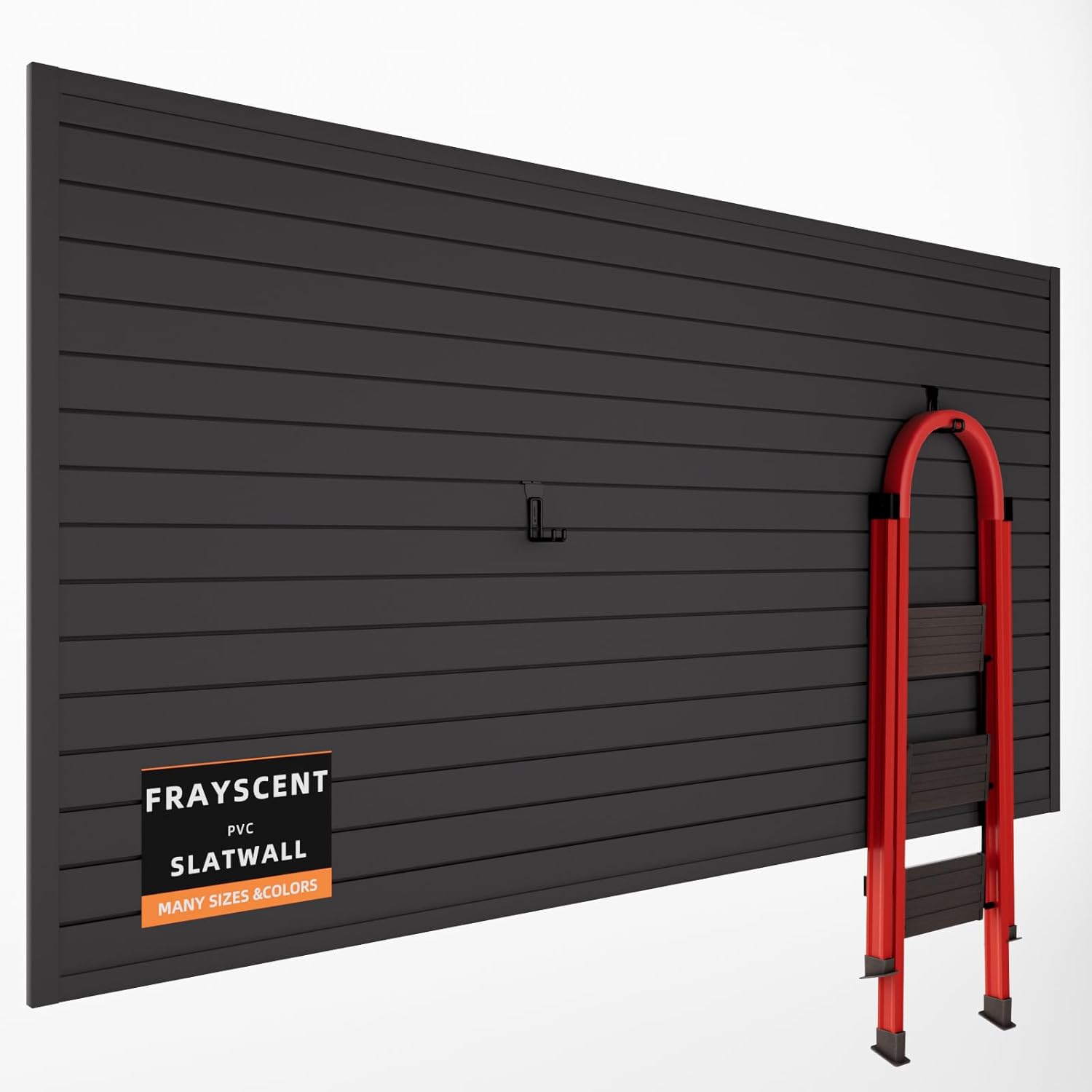
💡 Before you mount the panel, draw a floor plan of what accessories go where. Slatwall grooves are at fixed intervals — typically 3 inches apart — and your drill press holder or long-handle tool bracket may need to straddle a specific groove count. Mapping this out on paper first prevents the frustration of installing the panel and then realizing your heaviest item hangs right over a wall stud gap.
Your Weekend Project: The Tool Wall Upgrade
The install sequence matters here. Start by finding your studs and marking them with tape on the floor so you can reference them while holding the panel in place. Panels this size are typically fastened through the slatwall grooves directly into studs — the groove profile hides the screw heads and keeps the wall looking clean.
Have a helper hold the panel while you get your first few fasteners in. The level isn’t optional — get it right before you commit more than two screws. Once it’s secured at top and bottom on each stud, you’re done with the panel itself. Accessory installation from that point is plug-and-play: hook, press, done.
The payoff is a fully reconfigurable wall. Move a hook from one slot to another in five seconds with no tools. Add a bin for small parts, hang a shelf bracket for a spray bottle collection, mount a specialized holder for your impact driver. Every slatwall accessory on the market fits this panel — you’re not locked into a proprietary system.
Ready to fix this?
The FRAYSCENT Slatwall Panels 4×8ft PVC is the pick. One purchase, problem solved.
Check availability on Amazon →Frequently Asked Questions
How is PVC slatwall different from MDF slatwall? MDF slatwall is made from compressed wood fiber and is common in retail display fixtures. It’s cheaper but absorbs moisture, can swell or warp in a garage environment, and is susceptible to impact damage. PVC (polyvinyl chloride) slatwall resists moisture and doesn’t warp through freeze-thaw cycles — a meaningful difference for an unheated garage.
Will standard slatwall accessories fit FRAYSCENT panels? Yes. These panels use the universal slatwall groove standard (3-inch spacing), which means any accessory sold as “slatwall compatible” will fit — bins, hooks, shelf brackets, bike mounts, tool holders from any brand.
Can one person install a 4×8 slatwall panel? Technically possible with a lot of shimming and patience, but not recommended. The panels are heavy and unwieldy, and getting a 4-foot by 8-foot sheet level against the wall before drilling is genuinely a two-person task. The quality of your install (and your stress level) will be significantly better with a helper.
How many panels do I need for a typical two-car garage wall? A standard two-car garage wall is often around 20 feet wide. Four 4×8 panels would cover that span at 8 feet tall. Most people don’t cover the full height — covering the middle 4-6 feet of wall where tools and accessories hang is the sweet spot.
Is FRAYSCENT an established brand for garage products? It’s a newer brand with a limited review history (around 114 reviews at time of writing). The construction quality reported by reviewers is positive, but we don’t have the multi-year track record of more established names. Buy with that context in mind — and check recent reviews before purchasing to see if the track record has grown.
Full disclosure: As an Amazon Associate, we earn from qualifying purchases. Our recommendations are based on research, review analysis, and real household use only where explicitly noted. Commission rates play no role in what gets recommended — if a simple hardware-store fix beats a branded option, we'll say so.