garage
Why Your Garage Floor Keeps Disappearing (And the Shelf That Gets It Back)
Home Insight Hub is an Amazon Associate and earns from qualifying purchases. Read the full disclosure.
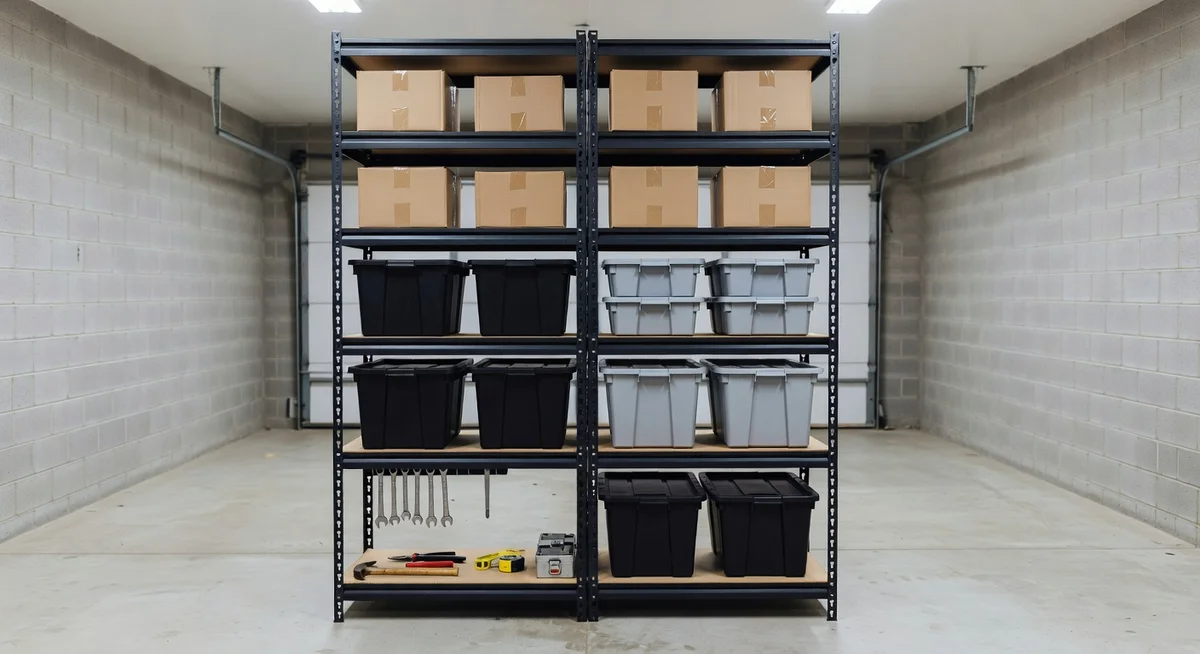
Two Sakugi listings, two jobs. The original (B0D5CKB5CT) is the 33" × 12.6" × 72" unit with the 1000 lb claim — better when the walking lane is tight and your bins are medium-depth. The newer 5-tier (B0FXFBD5RL) adds a wall-anchor strap for a loaded top shelf on sloped concrete, with the honest caveat that the listing still sat at 29 reviews when we framed it. Fair warning: 12.6 inches of depth will dump an oversized tote. Assembly alone on uneven slab is closer to 30 minutes than five.
Check if the Sakugi original garage shelves are currently in stock on Amazon →
Check if the Sakugi 5-tier wall-anchor listing is currently in stock on Amazon →
| Buy It For Life | Renter-Friendly | Hyper-Specific Fix | |
|---|---|---|---|
| Product | Gladiator steel shelving | Plastic stackable bins (no shelf) | Ceiling-mounted platform |
| Best for | Max weight capacity, permanent setup | No assembly, portable, reconfigurable | Freeing all floor space |
| Watch out | Much heavier, needs wall anchoring | Lower weight limit per bin | Requires ceiling joist mounting |
| Price range | Under $120 | Under $40 | Under $80 |
| Original Sakugi | 5-tier wall-anchor listing | |
|---|---|---|
| Product | Sakugi original (B0D5CKB5CT) | Sakugi 5-tier (B0FXFBD5RL) |
| Best for | Tight walkway, medium bins, no-drill setup | Uneven slab + loaded top shelf where a tip strap matters |
| Watch out | 12.6” depth / 33×72 footprint; 1000 lb is a total claim, not a dare | Wall-anchor install + 29-review early-adopter dataset |
| Skip if | Your totes are 18–20” deep | You want years of owner data before you buy |
A messy garage doesn’t happen all at once. It happens one cooler, one paint can, one holiday tote, and one random bag of potting soil at a time. Then one Saturday you open the door, look down, and realize the floor has become a narrow walking trail between piles of stuff you fully intended to organize three months ago.
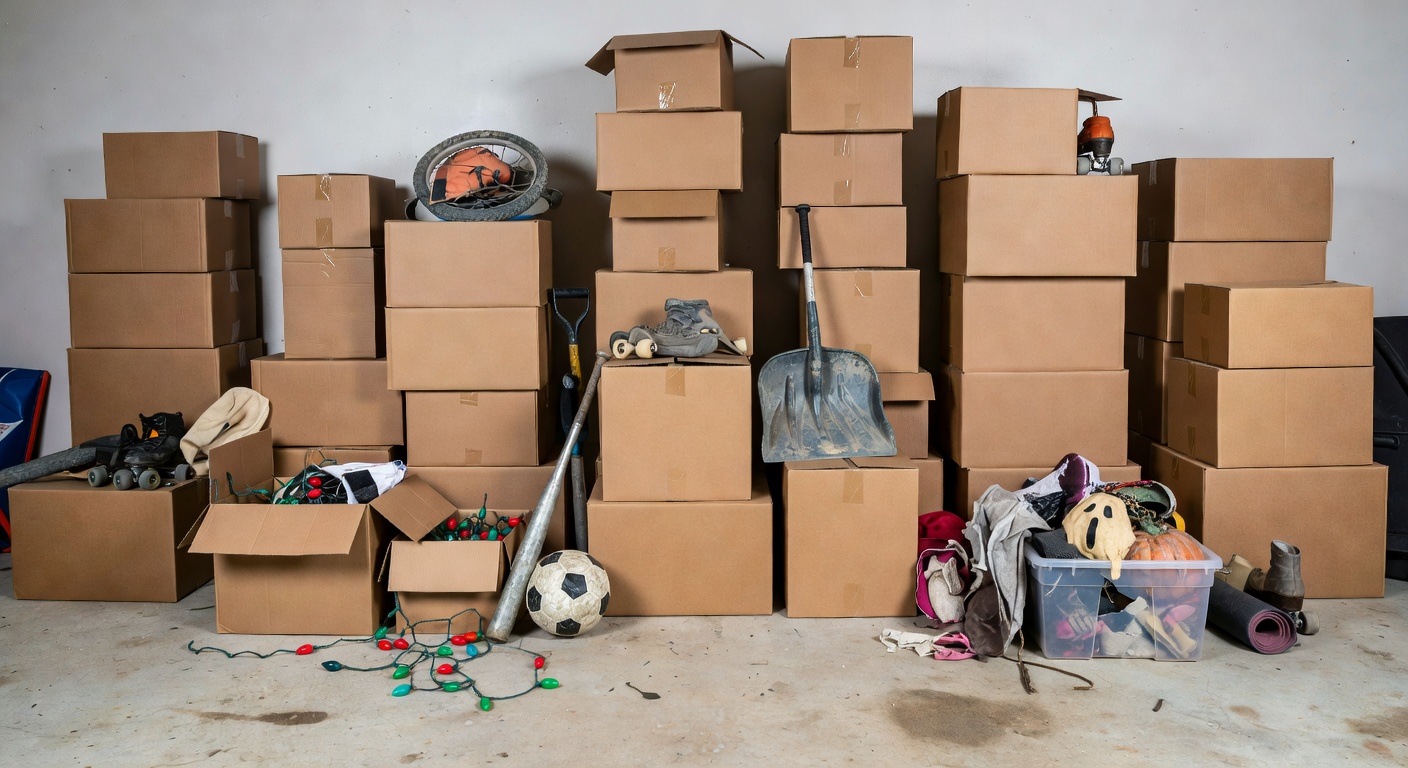
Why Most Garage Storage Shelves End Up Disappointing
A lot of garage shelves are either too weak, too shallow, or too annoying to assemble. The bargain racks with thin shelves bow the second you load up a few heavy bins. The deeper industrial ones hold more, but they eat your walking space and make a one-car garage feel even smaller. And the wall-mounted systems look sharp until you remember not everyone wants to drill into studs just to store fertilizer and an extension cord.
There is also the classic “rated for a thousand pounds” problem. That number sounds impressive until you realize it usually means ideal conditions, perfectly distributed weight, and a setup that assumes you’re more careful than real life allows. In real garages, people load one shelf heavier than the others, slide bins in hard, and park wet gear wherever it fits. The spec sheet matters, but the real question is whether it still works once normal people start using it.
What most garages actually need is simple vertical storage: something stable, adjustable enough for mixed-size bins, and not so deep that it turns into another place to lose things at the back.
What Actually Works — Sakugi 5-Tier Heavy-Duty Storage Shelves
The flaw: This rack is shallower than many buyers expect at 12.6 inches deep. That’s good for preserving floor space, but it also means oversized totes, bulky power-tool cases, and wider storage bins may hang over or not fit the way the product photos suggest. Assembly is also not a five-minute job. Expect closer to half an hour, especially if you’re doing it alone on an uneven garage floor.
- 33" W x 12.6" D x 72" H
- 5-tier alloy steel shelving unit with leveling feet
- Claimed max capacity: up to 1000 lbs total
- Best for medium bins, tools, supplies, and seasonal gear — not giant storage totes
Sakugi original garage shelves (B0D5CKB5CT)
A narrow-footprint metal shelving unit that gets boxes, tools, and garage overflow off the floor without demanding wall anchors or a full weekend project.
Check if the Sakugi original garage shelves are currently in stock on Amazon →The newer listing is a different ASIN, not a restock of this one. If the slab is sloped and the top shelf will be heavy, the Sakugi 5-tier with wall-anchor strap is the one that includes the anti-tip hardware. The 29-review caveat still applies — treat it as an early-adopter pick, not a proven decade shelf.
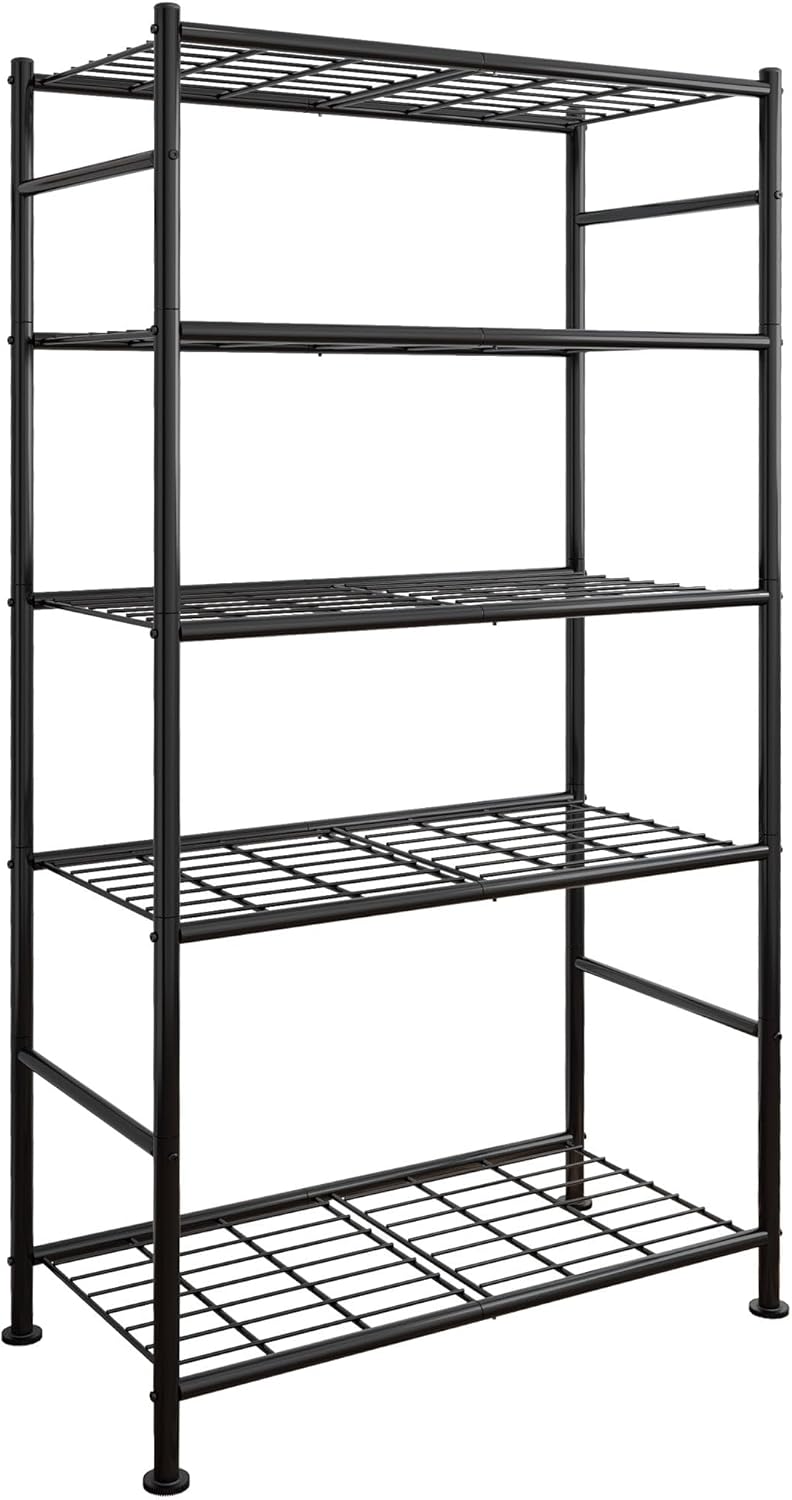
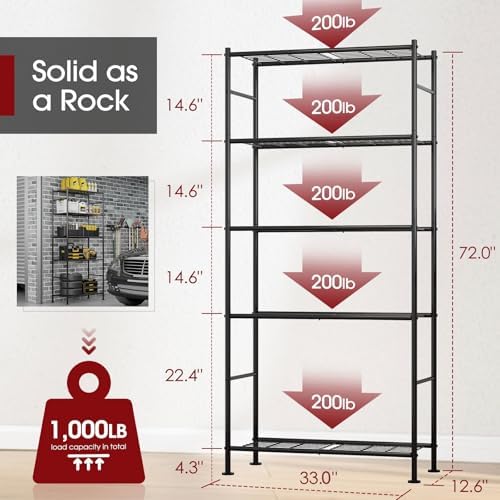
This shelf hits the sweet spot for a very common garage problem: too much stuff, not enough wall space, and no interest in building a whole custom system. The 33-inch width is wide enough to be useful, but the 12.6-inch depth keeps it from swallowing the room. That shallower profile is actually a feature if your garage is already tight, because you can line a wall without sacrificing the lane you need for bikes, trash cans, or the car door. If the bikes themselves are the floor hogs, a swivel vertical bike wall mount pairs better than trying to lean frames against the shelf.
Review patterns also suggest people like the leveling feet more than the listing makes obvious. Garage floors are rarely perfectly even. A shelf that can be stabilized on slightly sloped concrete is worth more than one with an extra shelf and no way to stop the wobble.
If the garage is also pulling double duty as hobby or craft overflow, modular wire cubes handle the smaller-bin sorting work inside the house before things migrate out to the garage in the first place.
This is best for homeowners, renters with basement or garage access, and anyone trying to create quick zones for tools, gardening supplies, sports gear, and seasonal bins. It is less ideal if your entire storage system depends on giant 18- to 20-inch-deep plastic totes. In that case, you need a deeper rack or a different layout altogether.
Better If / Skip This If
- Better if (original, B0D5CKB5CT): you want quick freestanding vertical storage, your bins are medium-depth, and you do not want to drill. 12.6 inches of depth keeps the walking lane.
- Better if (5-tier, B0FXFBD5RL): the slab is uneven, the top shelf will be loaded, and you will actually use the wall-anchor strap. Accept the 29-review dataset.
- Skip both if: your goal is to get the floor completely clear and you are willing to drill into studs. The FLEXIMOUNTS wall shelves do that better.
- Choose a different wall solution if: the real headache is tool access, hooks, and reconfigurable wall gear rather than stacked bins. The garage slatwall panel system is stronger for that kind of mess.
The Alternatives
The “Buy It For Life” Pick
A heavier commercial steel rack is the better move if you’re storing paint buckets, contractor tools, or dense workshop gear every day. You’ll pay more and give up some floor space, but the thicker shelves and wider frame make more sense for truly heavy-duty use.
The Renter-Friendly Pick
Freestanding shelves like this are already the renter-friendly answer for garage storage. You get the vertical capacity without anchors, studs, or a repair project when you move out.
The Hyper-Specific Fix
If your garage wall is broken up by outlets, pipes, or weird utility boxes, two narrower shelves often work better than one wide unit. It’s less elegant, but garages are where elegance goes to die anyway.
Decide what each shelf level is for before assembly: tools, car stuff, garden supplies, overflow paper goods, seasonal bins. If you skip that step, you'll just create a cleaner-looking junk pile six feet tall.
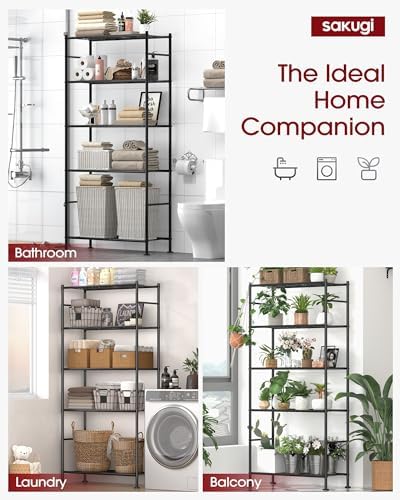
Your Next Step This Weekend
Stand in the garage and pick the wall where floor clutter collects first. Measure the width, then check the depth of your biggest bins. If most of your stuff fits inside that 12.6-inch profile, this shelf gives you the kind of vertical reset that makes the whole garage feel less hostile in one afternoon.
Frequently Asked Questions
How deep should garage shelves be?
It depends on what you store. Shallower shelves around 12 to 14 inches deep are better for tools, cleaners, and medium bins because they keep everything visible and preserve walking space. Deeper shelves work better for oversized totes but can make small garages harder to navigate.
Are freestanding garage shelves better than wall-mounted systems?
Freestanding shelves are usually better for renters, mixed-use garages, and quick weekend setups because they do not require drilling into studs. Wall-mounted systems are stronger for some loads but come with more installation friction.
What should not go on a narrow garage shelf?
Very deep storage totes, oversized power-tool cases, and anything that depends on a wide shelf footprint can be awkward on a 12.6-inch-deep unit. Narrow shelves are best for medium bins, hand tools, supplies, and organized categories you want to see easily.
Which Sakugi ASIN should I buy?
Buy the original listing (B0D5CKB5CT) for a 33 x 12.6 x 72 no-drill setup when medium bins and a tight walkway are the problem. Buy the newer 5-tier listing (B0FXFBD5RL) only if you will use the wall-anchor strap on an uneven slab. That second listing is a different ASIN with a thin 29-review dataset, not a restock of the first.
Full disclosure: As an Amazon Associate, we earn from qualifying purchases. Our recommendations are based on research, review analysis, and real household use only where explicitly noted. Commission rates play no role in what gets recommended — if a simple hardware-store fix beats a branded option, we'll say so.