closet
When Your Closet Floor Becomes a Clothing Graveyard (Wire Cubes to the Rescue)
Home Insight Hub is an Amazon Associate and earns from qualifying purchases. Read the full disclosure.
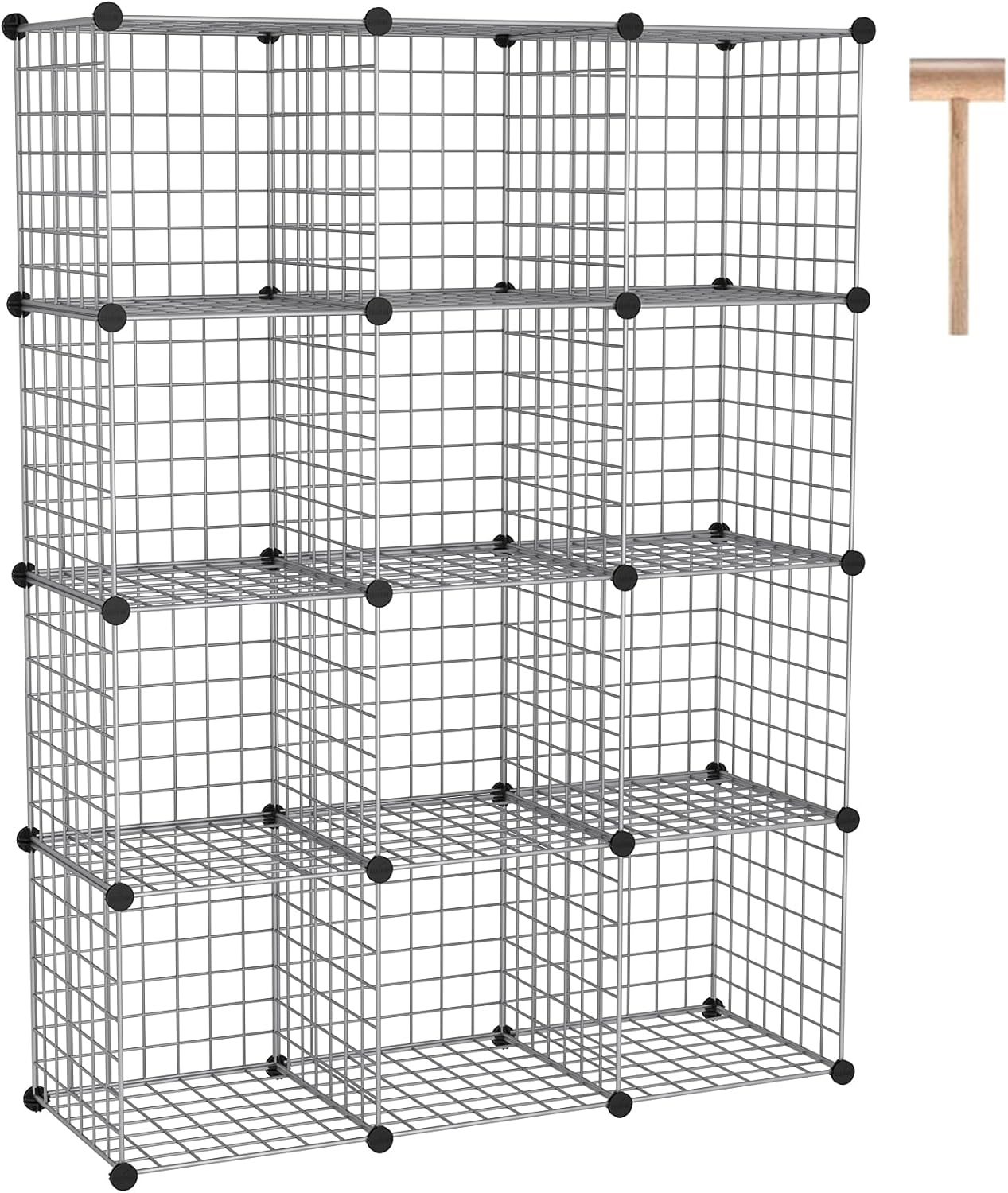
The C&AHOME Wire Cube Storage 12-Cube Organizer turns unused closet-floor height into 12 visible compartments. The current listing specifies metal wire panels, ABS plastic connectors, 11.8-inch cubes, and a seller-rated load of up to 22 pounds per cube. Fair warning: those openings are small enough that bulky sweater piles may need refolding, and any fabric bin you add must measure under 11.5 inches. Assembly also means joining a lot of panels and connectors with the included wooden mallet.
Check if the C&AHOME Wire Cube Storage 12-Cube Organizer is currently in stock on Amazon →
| The “Buy It For Life” Pick | The Renter-Friendly Pick | The Hyper-Specific Fix | |
|---|---|---|---|
| Setup | Fixed wood cubby | C&AHOME wire cubes | Over-the-door pockets |
| Better if | You want furniture that stays put | You need visible, reconfigurable floor storage | You have no usable floor space |
| Watch out | Heavy and harder to move | 11.8-inch openings require tighter folds | Best for light, small items |
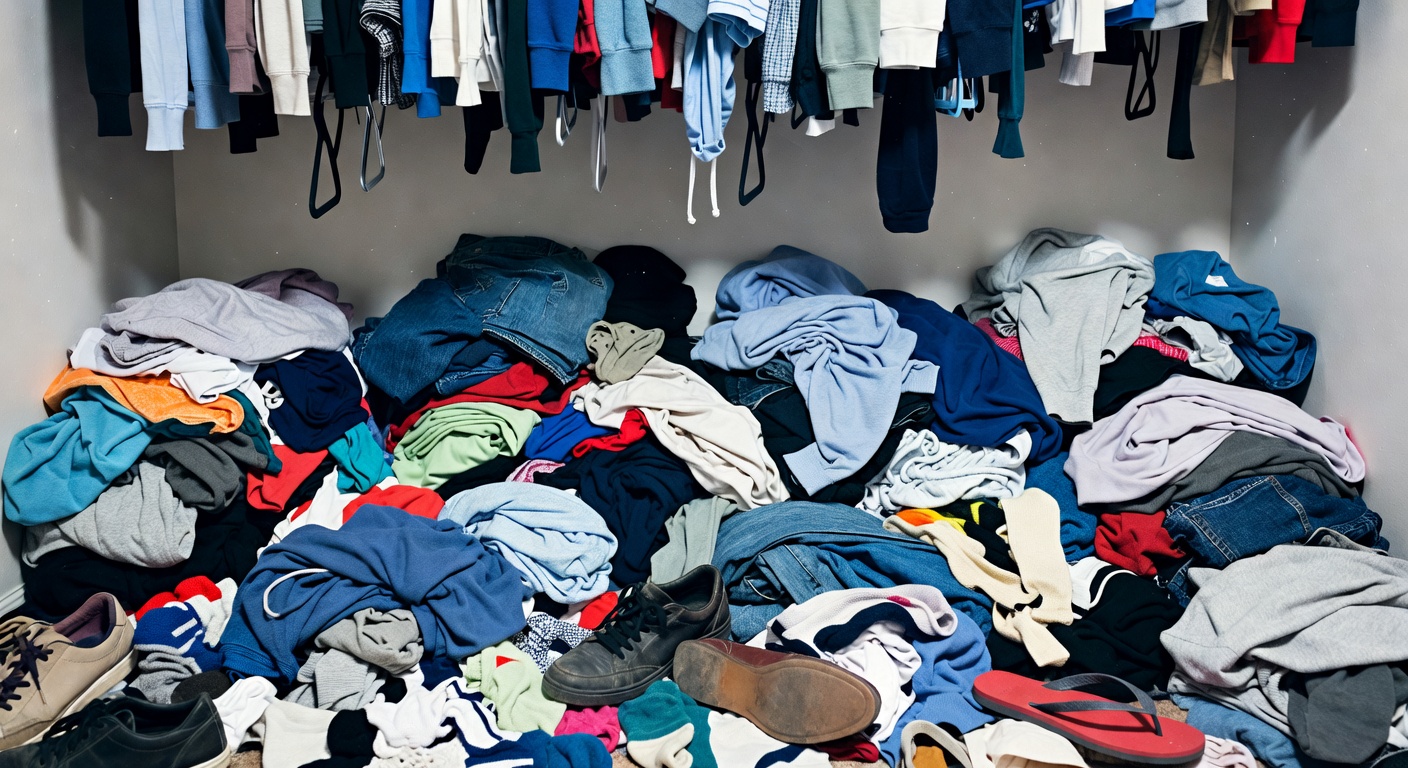
You open the closet door and there it is: a knee-high drift of sweaters, jeans you meant to fold later, and a gym bag slowly disappearing into the pile. The hanging rod above may work perfectly. The floor still acts like a landing pad.
Why the Closet Floor Keeps Becoming the Default Shelf
Most standard closets give you a rod, one high shelf, and a broad patch of floor. That lower space has no boundaries. A folded stack can lean in any direction, shoes drift underneath it, and the item you need tomorrow ends up at the bottom.
Soft hanging shelves use the rod rather than the floor, but they can sway when you tug out one stack. A low plastic drawer unit creates boundaries, yet it may leave the vertical space above it unused. Built-ins solve both problems, though drilling and custom carpentry make little sense for many renters.
A cube system works differently. Each clothing category gets a fixed-width compartment, and the grid uses height that a loose floor pile ignores. If the mess starts on an existing shelf instead, try the free folded-clothes shelf reset first. That test tells you whether a simple divider can solve the problem before you assemble a floor unit.
The C&AHOME Flaw Comes Before the Recommendation
The flaw: each opening measures 11.8 inches in all three directions. That keeps the footprint narrow, but it also forces wide sweater and denim piles into a smaller fold. The seller says compatible insert bins must measure under 11.5 by 11.5 inches, so the common 12-inch fabric cube is not a safe assumption.
Assembly adds friction too. The listing describes metal panels held by ABS plastic connectors and includes a wooden mallet to seat them. You can reconfigure the panels, but this is still a pile of parts on the floor before it becomes useful storage. If you want a unit that arrives as one finished cabinet, this is the wrong format.
- 12 cubes, each 11.8 × 11.8 × 11.8 inches
- Assembled listing dimensions: 36.6 inches long × 12.4 inches deep × 48.4 inches high
- Metal wire panels with ABS plastic connectors
- Seller-listed maximum load: up to 22 pounds per cube
- Includes a wooden mallet for assembly
- Compatible insert bins: smaller than 11.5 × 11.5 inches
C&AHOME Wire Cube Storage 12-Cube Organizer
Twelve metal-grid compartments for folded clothes, bags, shoes, or fitted insert bins.
Check if the C&AHOME Wire Cube Storage 12-Cube Organizer is currently in stock on Amazon →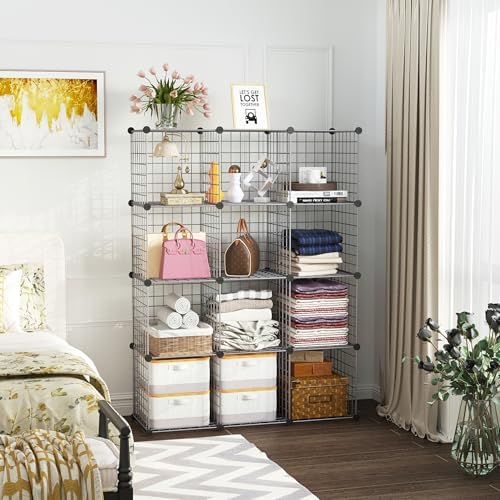
Why Wire Cubes Make Sense for Mixed Closet Categories
A loose clothing pile has no side walls. These cubes give each pile four boundaries while keeping the front open. Jeans can sit in one compartment, sweatshirts in another, and bags or shoes in the lower row. You can see every category without opening a drawer.
The seller lists clothes, books, shoes, toys, and bags among the intended uses. That range matters in a closet because the bottom zone rarely holds shirts alone. One cube can take a bag, another can hold shoes, and a fabric insert can contain socks or accessories—as long as the insert stays under the listing’s 11.5-inch limit.
The metal panels also let you change the arrangement within the included panel count. A four-row rectangle fits a narrow section of wall; a lower, wider layout may work better beneath short hanging clothes. Measure first. A 48.4-inch-tall unit will not fit under every rod, and 36.6 inches of width can swallow most of a small closet floor.
For bulky seasonal bins or tools, use heavy-duty garage shelving for larger loads rather than asking 11.8-inch closet cubes to act like warehouse racking.
Mark a 36.6-by-12.4-inch rectangle on the closet floor, then mark the 48.4-inch height on the wall. Open the door, move hangers, and reach into the lowest row. Ten minutes of tape is cheaper than discovering that the unit blocks the door trim.
Three Sensible Ways to Use the Space
1. The “Buy It For Life” Pick: a fixed wood cubby
A wood or laminated cubby looks more like furniture and gives folded clothes solid shelves. It suits homeowners who want a permanent layout and do not expect to move the unit between rooms.
The flaw: it weighs more, takes longer to disassemble, and locks you into one arrangement. Measure doorways as well as the closet.
2. The Renter-Friendly Pick: the C&AHOME wire cubes
The C&AHOME system uses connectors rather than built-in carpentry. That makes it easier to dismantle when you move and lets you rebuild the panels into a different shape.
The flaw: the grid looks utilitarian, and the 11.8-inch openings demand smaller folds than many standard wood cubbies. Loose straps and thin fabric can also poke through the open grid, so inserts make more sense for small accessories.
3. The Hyper-Specific Fix: over-the-door pockets
If the closet floor must stay clear, use the door for socks, scarves, leggings, and other light items. This does not replace a shelf for denim or bulky sweaters. It solves a narrower problem without consuming the floor.
The flaw: pockets add weight and bulk to the door, and thick items can stop it from closing cleanly. Check the door gap before loading every pocket.
The Setup That Does Not Waste Half the Cubes
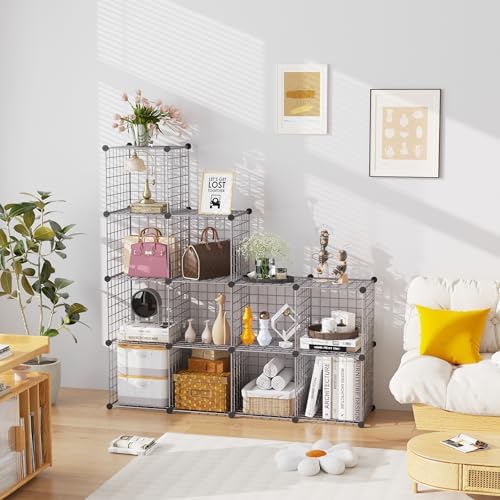
- Measure under the rod. Confirm at least 36.6 inches of width, 12.4 inches of depth, and 48.4 inches of height for the pictured configuration.
- Sort the floor pile before assembly. Separate folded clothes, shoes, bags, and small accessories. Empty cubes are useful; random cubes are not.
- Build with the included instructions. Seat each panel fully in its connectors and use the wooden mallet as directed by the seller.
- Put broad folded stacks in the easiest openings. If a sweater pile will not fit within 11.8 inches, refold it or choose a larger cubby instead of wedging it against the wire.
- Use fitted inserts for small items. Keep the listing’s under-11.5-inch requirement in mind.
- Leave one cube open. The clean clothes coming back from the laundry basket need somewhere to go.
Check the measurements before you build
Compare the 36.6 × 12.4 × 48.4-inch listed footprint with your rod height, door swing, and baseboard.
Check if the C&AHOME Wire Cube Storage 12-Cube Organizer is currently in stock on Amazon →Frequently Asked Questions
How much weight does the seller list for each C&AHOME wire cube?
The current listing states a maximum load of up to 22 pounds per cube. Treat that as the seller’s specification, distribute items between compartments, and follow the included assembly instructions.
How large is each opening?
Each cube measures 11.8 inches long, wide, and high. The seller says insert bins should be smaller than 11.5 by 11.5 inches.
Can you change the shape of the organizer?
The listing describes a modular structure that can create different cube arrangements within the supplied panel count. Rebuild it only according to the included instructions and make sure every connector seats fully.
Does it come with assembly tools?
The listing includes a wooden mallet for fastening the panels into the ABS plastic connectors. This is an assemble-it-yourself grid, not a finished cabinet.
Your Next Step This Weekend
Tape the full footprint on the floor before moving a single shirt. If the rectangle blocks the door, steals shoe space, or reaches into hanging clothes, stop there. A narrower shelf or door organizer will fit better.
If the outline works, sort the floor pile into no more than 11 useful categories and leave one cube open. The spare compartment keeps tomorrow’s laundry from starting a brand-new floor pile.
Full disclosure: As an Amazon Associate, we earn from qualifying purchases. Our recommendations are based on research, review analysis, and real household use only where explicitly noted. Commission rates play no role in what gets recommended — if a simple hardware-store fix beats a branded option, we'll say so.