closet
How to Keep Folded Clothes From Falling Over on a Closet Shelf
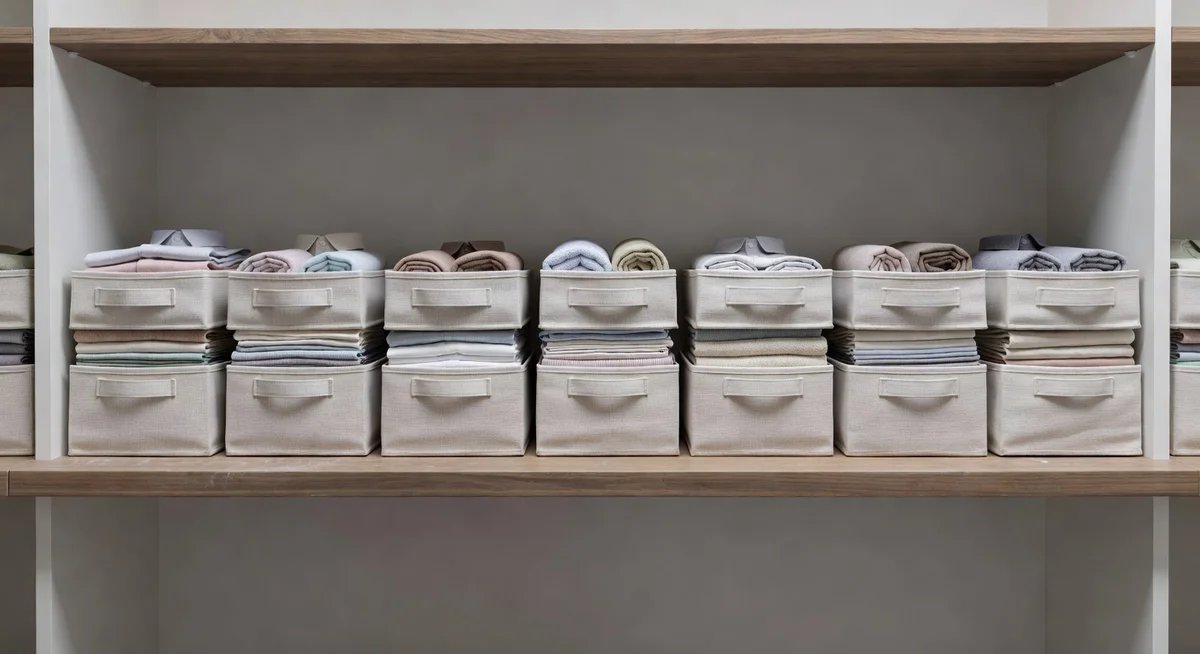
You pull one T-shirt from the middle of the stack. The shirts above it slump into the gap. A sweater slides off the side. By Friday, the neat pile has become a soft little landslide leaning against the closet wall.
This is not a folding failure. It is a shelf problem.
An open shelf asks a loose stack of fabric to stand upright with nothing at the sides, no fixed limit on height, and usually too much depth behind it. The fix is not folding every shirt into a flawless department-store rectangle. You need shorter stacks, firm boundaries, and a setup that lets you remove one item without disturbing the six around it.
- The pile leans sideways: it needs a divider or a narrower zone
- The bottom shirts disappear: the stack is too tall
- Everything slides forward: the shelf is slick or the pile sits too close to the edge
- One sweater wrecks the pile: bulky and thin clothes need separate stacks
- The back half becomes a graveyard: the shelf is too deep for one row
Why Folded Clothes Fall Over
Fabric stacks have no frame. A crisp cotton shirt may hold its fold. A soft sweatshirt slowly spreads. Leggings slip. Knitwear compresses under its own pile, then bulges at the sides. Mix all four in one tower and the least cooperative item gets to make the rules.
Height makes it worse. The taller the pile, the more weight sits on the bottom item and the farther the top can lean before it falls. A stack that reaches from the shelf to the closet ceiling may look efficient for one photograph. Daily use turns it into textile Jenga.
Depth causes a different mess. Most folded shirts do not need the full depth of a closet shelf. Push them to the back and you cannot see them. Pull them to the front and the empty space behind the pile collects the clothes you meant to put away properly later. Later has a crowded closet.
Before buying anything, remove every item from one shelf and sort it by bulk: thin shirts, pants, sweatshirts, and sweaters. That one split solves more than color-coding ever will.
The Free Fix: Build Shorter, Narrower Stacks
Start with one shelf. Do not empty the whole closet unless you enjoy spending Saturday surrounded by every shirt you have owned since college.
- Make each stack one clothing type. Keep T-shirts with T-shirts and bulky sweaters with bulky sweaters. Similar items settle at a similar rate.
- Cap the stack where you can still remove the bottom item. If reaching the bottom requires holding the tower with your chin, split it into two piles.
- Put heavier folded items at the bottom. Jeans under T-shirts work better than jeans dropped on top of a soft knit stack.
- Leave a hand-width of working room above the pile. You need space to lift an item out instead of dragging it through the stack.
- Keep the front edge a few inches back from the shelf edge. A small landing strip catches a shifting sleeve before the whole pile reaches the floor.
Use two sturdy bookends or empty boxes as temporary dividers for one week. If the stacks stay upright, you have proved that boundaries solve the problem. Then decide whether the temporary fix looks good enough to keep.
Do not chase identical folds. Choose one width that fits two or three stacks across the shelf, then fold to that rough width. Consistency matters because the piles need straight sides, not because the closet police are coming.
Pick the Boundary That Matches the Clothes
You have three sensible options. The right one depends on weight, shelf depth, and how often you reach for the clothes.
Shelf dividers for sweaters and sweatshirts
Dividers preserve the open-shelf look while stopping one pile from borrowing space from the next. They work best when the shelf already sits at a comfortable height and you can see each stack.
The flaw: clip-on dividers can wobble on thin shelves, and rigid dividers may not fit a thick shelf lip. Measure the shelf thickness before you buy anything. Renters should also check for sharp clamps or pads that could mark painted wood.
Use one divider between piles rather than boxing in every six inches. Too many dividers create narrow slots that make putting laundry away more annoying than the original mess.
Open-front plastic bins for light, slippery clothes
Perforated plastic bins give leggings, gym shirts, socks, and soft T-shirts firm side walls while leaving the front open. You can move one level forward instead of reaching into a dark stack, and the separate openings keep one category from leaning into the next.
The flaw: the SNSLXH bins move forward only halfway rather than sliding out like drawers. A low opening can feel awkward unless the stack sits against a wall or solid closet back. They also suit lightweight clothes better than dense denim.
If light clothes are the problem, our guide to open-front stackable plastic bins for light folded clothes explains the 16.73-inch depth, halfway-pull limit, and measuring checks before you commit to five levels.
Rigid cubbies for heavy or mixed stacks
A cubby gives every pile a top, bottom, and two sides. That makes it the least fussy option for jeans, sweatshirts, bags, or a shared closet where several people put clothes away differently.
The flaw: rigid systems take more floor or wall space, need assembly, and may require wall anchoring when stacked tall. They also turn a quick shelf fix into a larger closet project.
For a closet floor that needs structure as much as the shelf does, compare rigid wire cube storage for heavier folded clothes with the lighter bin approach. The useful distinction is load and structure: open-front plastic bins separate lightweight clothes, while rigid wire cubbies suit heavier mixed categories.
What to Do With a Deep Closet Shelf
A deep shelf tempts you to build a front row and a hidden back row. That arrangement works until you forget the back row exists. Six months later, you discover three sweaters and a fitted sheet you accused the dryer of eating.
Use depth in one of these ways:
- Daily clothes in front, seasonal clothes in a labeled bin behind. Keep the back row contained so it comes out as one unit.
- One pull-forward basket per category. The container uses the depth without hiding loose items.
- Folded clothes in front, rarely used bags behind. Give the rear space to objects you do not need every morning.
Avoid two loose rows of shirts. You will disturb the front stack every time you reach for the back one, which puts you right back where you started.
If the shelf sits above eye level, open stacks become even less practical because you cannot see the top surface or reach the bottom safely. Use lightweight pull-forward containers and keep anything heavy lower in the closet.
The Setup That Survives Laundry Day
A closet system fails when putting clothes away takes too many decisions. If you must fold every item to a precise size, remember seven categories, and remove a lid before anything goes on the shelf, clean laundry will migrate to a chair. The chair knows what it did.
Give each shelf a simple rule:
- one category per stack or container
- no pile tall enough to block the shelf above
- no loose second row
- no heavy item on top of soft knits
- one empty slot for clothes currently in the wash
That empty slot matters. A shelf packed to the last inch has no room for the clean clothes coming back tomorrow. Leave a little slack and the system can absorb laundry day without becoming an avalanche by bedtime.
Once a month, pull out anything you keep moving around but never wear. You do not need to stage a dramatic closet purge. Just stop making the useful clothes support a pile of guilt shirts.
Frequently Asked Questions
How do you keep folded clothes neat on open shelves?
Use short stacks of similar-weight clothes, leave room above each stack, and add dividers or containers so piles cannot lean into one another. Avoid a loose back row on deep shelves.
Should sweaters be stacked or put in bins?
Short sweater stacks work well between firm dividers. A bin helps when the shelf is deep or above eye level, but soft-sided bins may bow if you overfill them with bulky knits.
Can you file-fold clothes on a closet shelf?
File folding works best inside a drawer, basket, or cubby that supports the clothes on both sides. On an open shelf, upright folded items usually slump unless a container keeps the row snug.
How many clothes should go in one stack?
There is no useful universal number because a stack of thin T-shirts behaves differently from a stack of sweatshirts. Stop adding items when you can no longer remove the bottom piece without holding the rest of the pile in place.
What is the cheapest way to divide a closet shelf?
Test the idea with sturdy bookends or empty boxes you already own. If boundaries keep the piles upright for a week, you can keep the free setup or replace it with dividers sized for your shelf.
The 10-Minute Shelf Reset This Weekend
Choose the shelf that collapses most often. Remove everything. Make separate piles for thin shirts, pants, sweatshirts, and sweaters. Put back two or three short stacks with a temporary divider between them, then leave one small empty zone for the clothes currently in the wash.
Live with it for a week before buying anything. If the piles stay upright, keep the boundaries. If they still slide, move the slippery items into a basket. If heavy clothes bow the basket or swallow the shelf, use a rigid cubby lower down.
The goal is not a closet that looks untouched. It is a closet where pulling out one shirt does not bring six friends with it.