garage
A Freestanding Rack Will Not Give the Floor Back
Home Insight Hub is an Amazon Associate and earns from qualifying purchases. Read the full disclosure.
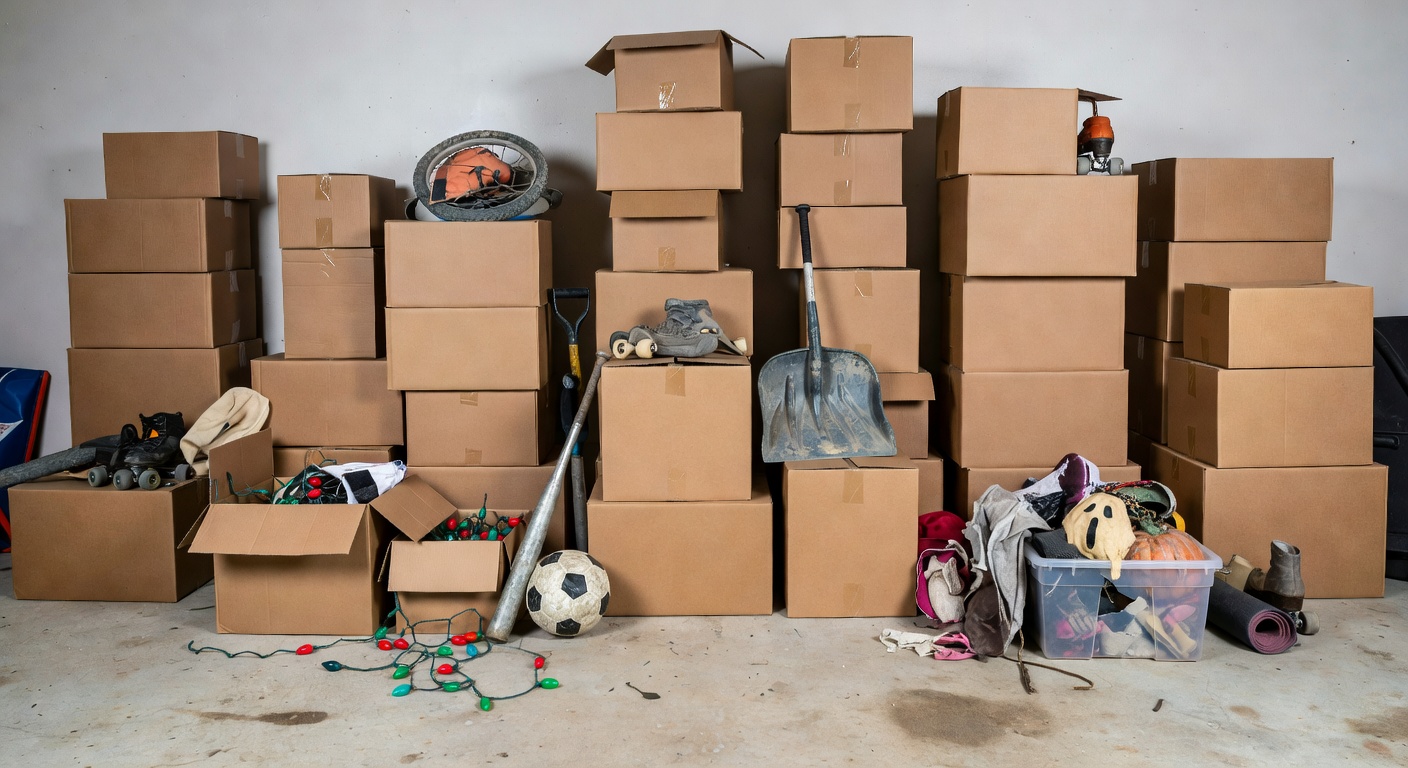
The floor is a trail between totes. A freestanding rack lifts the bins and still stands on the slab. A wall shelf takes the bins off the floor and puts holes in the studs. Buy the rack when you cannot drill. Buy the wall shelf when the walking lane is already gone. Neither one hangs a bike, and neither one is a slatwall.
- Tight walkway, medium bins, no drill: the freestanding shelf.
- Seasonal totes that can live on the wall, and you can hit studs: the wall shelf.
- Oversized totes deeper than 12.6 inches: the freestanding rack will dump them.
- You rent, or the wall is block with no studs: do not start with the wall shelf.
Measure one tote before you order. Depth, and whether you can hit a stud behind the wall you would drill. A listing photo of an empty garage is not your slab. If the tote is deeper than the shelf, the rack will not hide it. If you cannot drill, the wall shelf is the wrong Saturday.
The Rack Stays on the Slab
The flaw: The Sakugi original is 12.6 inches deep. That keeps the walking lane, and it dumps an oversized tote. The 1000 lb figure is a total-system claim, not permission to load one shelf until it bows. Assembly on an uneven slab is closer to 30 minutes than five, and it is worse alone.
The original listing is the 33 by 12.6 by 72 inch unit. Leveling feet. Metal. It is the pick when the mess is boxes and the lane beside the car is already tight. Medium-depth bins fit. A wide power-tool case hangs off the front. The newer 5-tier listing adds a wall-anchor strap for a loaded top shelf on a sloped floor. That is a different box. This comparison is the original freestanding rack against a shelf that leaves the slab.
It does not clear the floor. The feet still stand where a tote used to sit. If the job is “the car door will not open,” a rack in the lane is another obstacle with nicer bins on it.
When you cannot drill
12.6 inches deep. 72 inches tall. The 1000 lb claim is the whole rack, not one shelf.
Check if the Sakugi garage shelves are currently in stock on AmazonThe two-listing notes are in the Sakugi garage shelf guide.
The Wall Shelf Leaves the Slab
The flaw: The FLEXIMOUNTS 2-pack is a two-person install. The horizontal rail is 6 feet. Holding it level while you mark and drill is not a solo Sunday. The 400 lb rating for the pair needs studs, not drywall anchors. A renter who has to patch six large holes per bracket should pause. Block or brick with no wood behind it needs masonry anchors, which is a different job.
Each shelf is 24 by 72 inches, powder-coated steel. Two of them. The review’s capacity is 400 lb for the pair, about 200 lb each. Holiday bins, sports gear, oil, the tote you touch twice a year. Adjustable brackets, so you set the height before you commit. That is the product that actually gives the floor back.
It does not belong on a tension-free fantasy wall. Miss the stud and the rating is a story. It is also not a daily-access pantry. A loaded 6-foot shelf is a two-person move if you change your mind in March.
When the floor has to be empty
Two 24 by 72 inch shelves. 400 lb for the pair. Studs. Two people. Not a renter patch job.
Check if the FLEXIMOUNTS wall shelves are currently in stock on AmazonThe stud notes are in the FLEXIMOUNTS wall shelf review.
Which One to Buy
| Your garage | Buy |
|---|---|
| No drill, tight lane, medium bins | Sakugi freestanding rack |
| Studs you can hit, seasonal totes, floor must clear | FLEXIMOUNTS wall shelves |
| Totes deeper than 12.6 inches | Not the freestanding rack |
| Renting, or block wall with no studs | Not the wall shelf |
Do not buy both on the same Saturday to “see which feels sturdier.” One tape measure and a stud finder answers it. If the car door is the complaint, a freestanding rack in that lane does not fix it. If you cannot leave holes, the wall shelf is furniture you will resent in a year.
What Neither One Does
Neither one hangs a bike. Bikes on the slab are a mount problem, not a bin problem. The garage hub already separates that job from bulk storage. Start there if two bikes are why you cannot walk in. The map is the garage hub.
Neither one is a slatwall. Hooks for tools that migrate back to the concrete are a wall-panel job. A shelf holds totes. It does not replace a hook you can reach without a ladder.
Neither one dries a wet slab. If the floor smells because water sits under the bins, lift the bins and fix the water before you bolt a rail over it.
Frequently Asked Questions
Is a wall-mounted garage shelf better than a freestanding rack?
Only if you can hit studs and the floor has to be empty. The FLEXIMOUNTS pair is two 24 by 72 inch shelves, 400 lb for the pair, and a two-person install. The Sakugi original stands on the slab, 12.6 inches deep, and keeps a tight walkway. A wall shelf gives the floor back. A rack does not.
Will the freestanding shelf hold a deep tote?
Not if the tote is deeper than 12.6 inches. The review’s flaw is that oversized totes hang off or do not fit. Measure one tote before you order.
Can a renter install the wall shelf?
Only if patching the holes is acceptable. The review says six large holes per bracket, into studs, or the 400 lb rating does not apply. Drywall anchors are not the rated install.
Should I buy the rack and the wall shelf together?
No. If you cannot drill, buy the rack. If the lane is already gone and you can hit studs, buy the wall shelf. Both is how a one-car garage gets two storage systems and still no place to stand.
Your Next Step This Weekend
Find a stud, or admit you will not drill. If you will not drill, the Sakugi rack is the one, and measure the tote against 12.6 inches first. If the floor has to be empty and a friend can hold the rail, the FLEXIMOUNTS shelves are the buy. If the mess is bikes, stop. Neither of these hangs one.
Full disclosure: As an Amazon Associate, we earn from qualifying purchases. Our recommendations are based on research, review analysis, and real household use only where explicitly noted. Commission rates play no role in what gets recommended — if a simple hardware-store fix beats a branded option, we'll say so.