bathroom
Why Your Shower Caddy Keeps Falling Off the Tile (And the Surface Test That Stops It)
Home Insight Hub is an Amazon Associate and earns from qualifying purchases. Read the full disclosure.
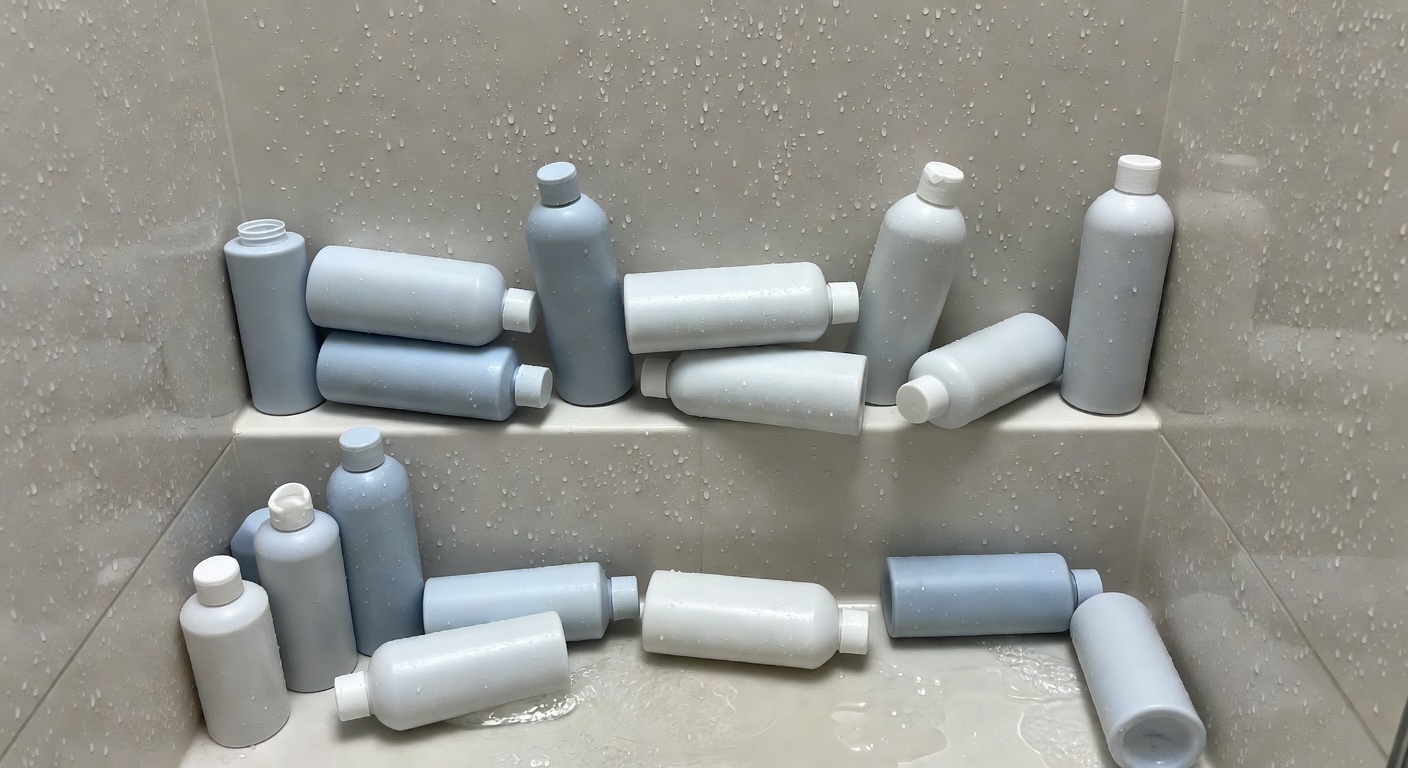
The water is finally hot. Then the whole shelf lets go. Bottles hit porcelain. Conditioner smears the tub. You are standing barefoot in shampoo at 6:12 AM, staring at a pad that looked fine last night.
This is not bad luck. Adhesive shower storage fails for a short list of boring reasons: the tile never bonded, the wall was still filmed with soap, or you loaded the shelf while the pad was still wet. Fix those, and most “it just fell” stories stop. Ignore them and you will keep buying stronger stickers for a wall that cannot hold them.
- Read the tile: smooth glazed ceramic, glass, or metal can hold; textured, matte, and stone usually cannot
- Kill the film: soap scum and body oil beat adhesive every time
- Wipe with alcohol: household spray leaves residue; rubbing alcohol does not
- Stay off grout: pads need a flat face, not a grout ditch
- Wait 24 dry hours: load it the same night and you tested the wrapper, not the bond
The Wall Is the Product
People blame the brand first. The wall decides.
Wet-area adhesive — the same family as bathroom Command-style strips and the big pads on no-drill caddies — needs a smooth, non-porous face. 3M’s own bathroom-hook instructions are blunt: clean with rubbing alcohol, skip household cleaners and water, stay off textured walls, and avoid grout lines on tile. That is not marketing. That is the bond talking.
If your shower is pebbled, honed stone, or a matte tile with enough texture to catch a fingernail, the pad is sitting on peaks. Water sneaks under. The shelf lasts a week, then you hear it at 2 AM.
The flaw: a perfect install cannot rescue the wrong surface. If the tile is textured, stop shopping for a “stronger” pad. You need a different category.
Dry the wall. Drag a fingertip across the spot you want. If you feel grit, orange-peel texture, or stone pits, skip adhesive. If it feels like a dinner plate — glassy, no tooth — continue to the alcohol wipe and a one-shelf test.
What Usually Makes It Fall
1. You stuck it to soap, not tile
Shower walls wear a film of soap, hard-water minerals, and skin oil. It looks clean when wet. It is not. Adhesive grabs that film, then the film lets go of the tile.
Wipe the spot with a dry cloth until it looks dull-clean. Then wipe with isopropyl rubbing alcohol and let it flash off. Do not “prep” with all-purpose spray. Wet-area makers keep repeating the same line: cleaners leave residue; alcohol does not.
2. You loaded it while the pad was still curing
Homes & Gardens and a long trail of adhesive-shelf instructions land on the same rule: leave the pad alone for a full 24 hours, dry, before the shelf takes weight. Steam during that window is the usual way people cheat and then swear the product is junk.
Pick a wall the shower head does not blast. Mount one small shelf. Leave the house if you have to. Load it tomorrow.
3. The pad is sitting on grout
Grout is a valley. A pad that overlaps a grout line has a built-in leak path. Center the pad on one tile face. If the tile is smaller than the pad, adhesive was the wrong pick for that wall.
4. You trusted a suction cup to survive steam
Suction cups fail for a different reason than pads. Heat and humidity break the vacuum. The consensus from people who have lived with them is ugly and consistent: they look fine for a few showers, then they let go. Warming the cup or adding grease can buy a day. It does not turn a suction cup into a shelf system.
Over-the-showerhead wire racks fail a third way. Everything hangs from one hook. Full conditioner bottles win. The rack tilts, rusts, and dumps.
The One-Shelf Weekend Test
Do this before you mount a six-piece set or peel six dead pads off the wall.
- Pick the emptiest smooth tile, away from the direct spray.
- Alcohol-wipe a pad-sized rectangle. Let it dry.
- Stick one small shelf. Press hard. Leave it unloaded.
- Keep that wall as dry as you can for 24 hours.
- Load your heaviest everyday bottle. Live with it for a week.
If it holds, the surface is honest. Then a rustproof adhesive shower caddy set on that same tile type is a fair next step — still one wall at a time, still a 24-hour wait on every pad. If the test shelf creeps or drops, stop. You just saved yourself a peel-and-fail weekend.
When Adhesive Is the Wrong Category
Skip pads if any of these are true:
- The tile is textured, natural stone, or matte enough to feel sandy.
- You cannot keep the wall dry for a day.
- You need to hang liter bottles on a pad the size of a coaster.
- You rent and the tile is already chipped from the last tenant’s experiment.
The fallback that actually ignores surface type is a tension-pole caddy that seats in the tub or on the floor. It eats a little footprint. It does not care about your glaze. A glass-door hook rack is the other honest renter move: less capacity, zero wall contact, leaves with you.
Do not glue a failing pad back on with construction adhesive “just this once.” That turns a renter-safe miss into a deposit problem.
When the Crash Is Not a Shower-Wall Problem
If bottles are not the thing making you late, stop buying shower hardware.
Crowded serums and backup toothpaste on the vanity are a reach problem. A clear bathroom lazy Susan handles that without touching tile. If the floor is already full and the tank wall is empty, the freestanding bamboo over-toilet shelf uses dead air instead of another crashing ledge.
Match the zone. A shower pad will not fix a sink counter.
Your Next Step This Weekend
Do not order a new set tonight. Walk into the shower dry. Feel the tile. If it is glassy, alcohol-wipe one square and park a single test shelf there until tomorrow night. If it is textured, measure for a tension pole or a door hook and leave the pads at the store.
The win is not a prettier shower photo. The win is a Tuesday morning where nothing hits the tub.
Frequently Asked Questions
Why does my adhesive shower caddy keep falling off? The pad usually never bonded. Common causes are textured or stone tile, soap film under the pad, grout-line placement, or loading the shelf before a 24-hour dry cure.
Should I clean the tile with bathroom spray before I stick the pad? No. Wet-area adhesive makers tell you to skip household cleaners and water. Wipe visible scum off, then use rubbing alcohol and let it dry.
How long should I wait before putting bottles on a new shower shelf? Wait a full 24 hours, and keep that wall as dry as you can during the wait. Same-night loading is the usual way a good pad fails on good tile.
Do suction-cup shower caddies work better than adhesive pads? Not for daily bottles. Steam and temperature swings break the vacuum. They are a short experiment, not a storage system.
What should I use if my shower tile is textured? Skip adhesive. Use a tension-pole caddy or a hook rack on a glass door. Test-fit the pole so it cannot walk on a sloped tub floor.
Full disclosure: As an Amazon Associate, we earn from qualifying purchases. Our recommendations are based on research, review analysis, and real household use only where explicitly noted. Commission rates play no role in what gets recommended — if a simple hardware-store fix beats a branded option, we'll say so.