garage
When Cheap Wire Shelves Collapse, This Is What You Upgrade To
Heads up: This post contains affiliate links. As an Amazon Associate, we earn from qualifying purchases — at no extra cost to you. Our recommendations are based on research, review analysis, and real household use only where we explicitly say so.
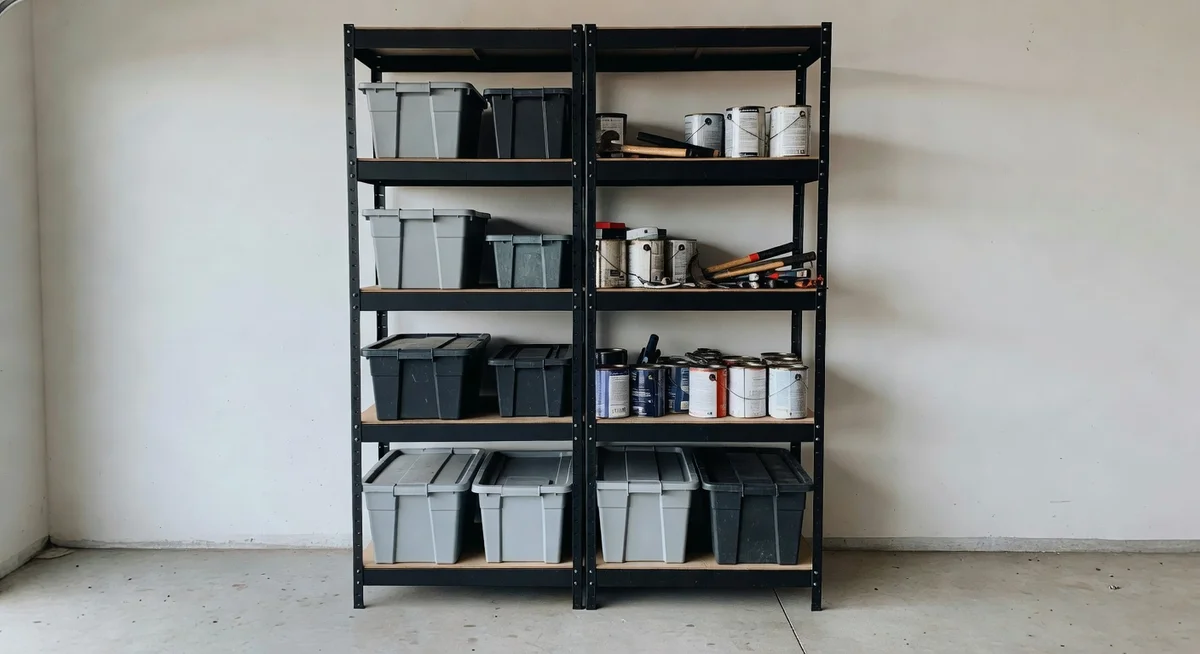
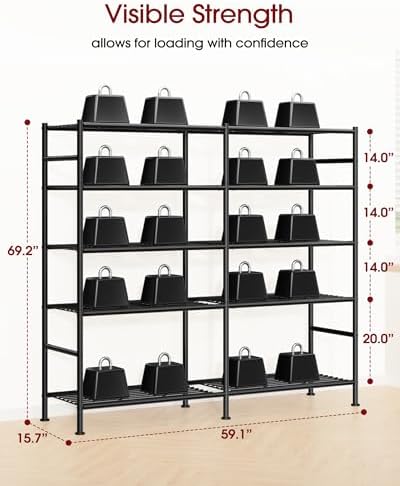
Sakugi 5-Tier Heavy Duty Garage Shelving — solid steel decking with adjustable leveling feet for uneven concrete floors and included wall anchor strap to prevent tipping, from a brand with a solid track record in this category. Fair warning: this is an early-adopter pick with only 29 reviews, so long-term durability data is genuinely limited — if you need a proven product with years of feedback, check back in a few months. But for the price, nothing else comes close.
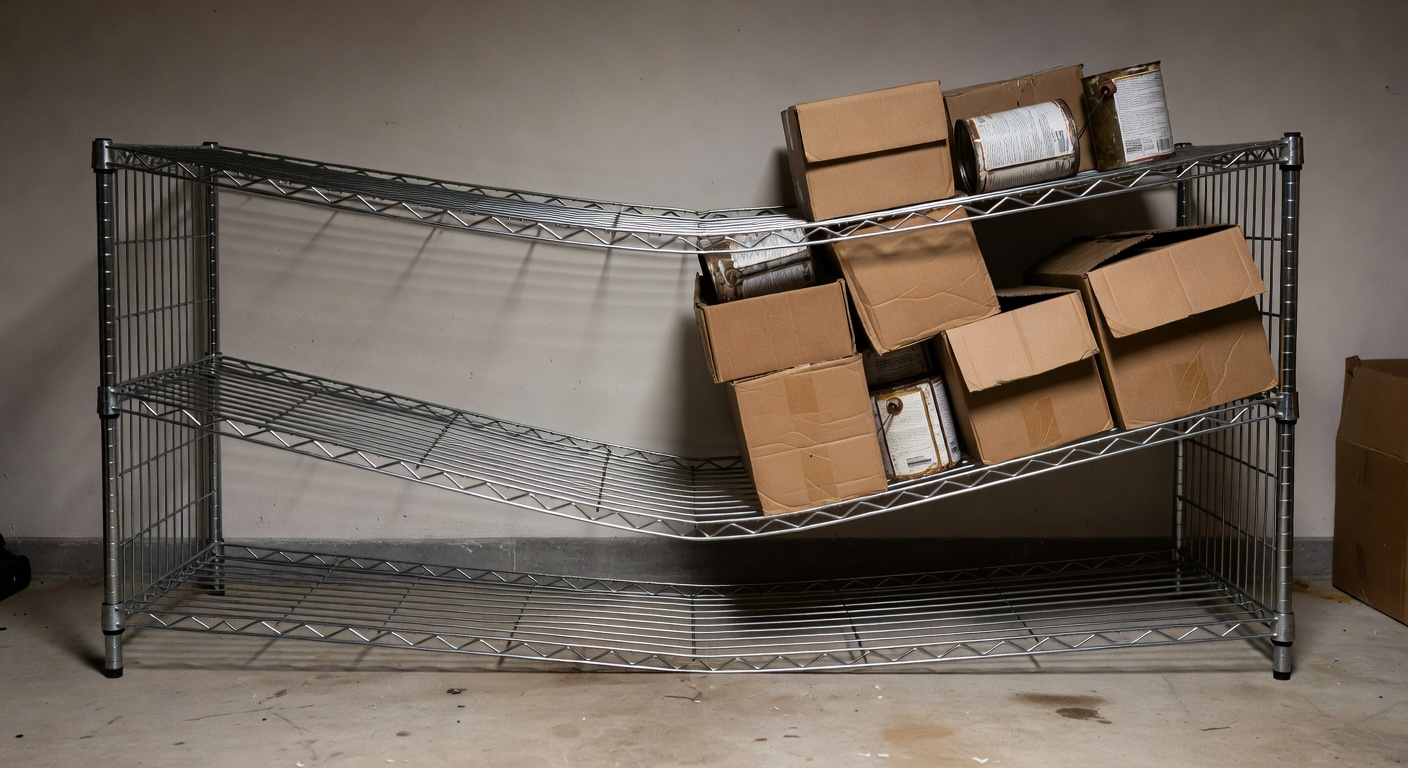
The cheap wire shelf in your garage is lying to you. It looks like it’s holding everything fine. It looks stable enough. But put your hand on the top shelf and push sideways — feel that? That flex and wobble means the frame is fighting every pound you add. And wire shelving doesn’t fail all at once in a dramatic collapse. It sags slowly, the wires bow in the middle, and then one day you go to grab something from the bottom shelf and the whole unit has tilted three degrees toward the wall.
Budget wire shelving is engineered for closets. Pantries. Linen rooms. Places where the heaviest thing you’re storing is a stack of folded bath towels. Your garage has oil jugs. Car batteries. A 40-pound bag of water softener salt. A stack of cinder blocks you bought “for a project.” Wire shelves aren’t rated for any of that, and the ones that claim 200 pounds of capacity are usually measuring shelf surface on a perfectly rigid, perfectly level floor — not the actual failure point of the frame under real-world garage conditions.
The solution isn’t harder-to-assemble wire shelves. The solution is steel-frame shelving designed from the start for garages: thick uprights, solid shelf decking, adjustable feet for the uneven concrete slab that no garage in history has ever had perfectly level.
5 Tiers, Leveling Feet, Wall Anchors — The Garage Shelf Spec Sheet That Makes Sense
Sakugi’s 5-tier garage shelving unit addresses the three real problems with budget shelving in one design: inadequate capacity, wobble from uneven floors, and the anxious feeling that the whole thing might tip. The leveling feet adjust for up to an inch of floor variance — genuinely useful in a garage where concrete slabs shift and settle. The wall anchor strap keeps the unit from tipping forward when a loaded upper shelf shifts. And the shelf decking is solid steel panel, not wire, so small items don’t fall through.
- Configuration: 5-tier freestanding shelving unit
- Material: Heavy-duty steel frame with solid shelf decking
- Leveling feet: Adjustable, handles up to ~1 inch of floor variance
- Wall anchors: Included anti-tip strap for wall attachment
- Adjustable shelves: Multiple height positions
- Rating: 4.6/5 from 29 reviews
Here’s the part we’re legally and ethically obligated to tell you: 29 reviews is a small number. This is an early-adopter pick. We’re recommending it based on the quality of reviewer feedback, the design specs, and Sakugi’s track record with their other garage shelving products — but we’re not pretending 29 reviews is a statistically robust dataset. If you’re the type who waits for 1,000+ reviews before buying, this isn’t your shelf yet. Check back in six months and see where the review count lands.
That said — Sakugi has been making garage shelving long enough that we’ve covered their previous model separately. The build quality, assembly experience, and long-term stability on their existing line have earned solid marks from reviewers with real garage loads on them. This 5-tier model with the leveling feet appears to be a genuine improvement on that formula.
The flaw: With 29 reviews, the long-term durability data simply doesn’t exist yet. We know the early adopters are happy. We don’t know how the leveling feet hold up after two winters of freeze-thaw cycling on a concrete floor, or whether the wall anchor strap hardware is appropriately beefy for a fully-loaded upper shelf. Buy this with the understanding that you’re getting a well-designed product from a brand with a decent track record — and slightly less certainty than a product with 3,000 reviews would offer.
Who This Works For
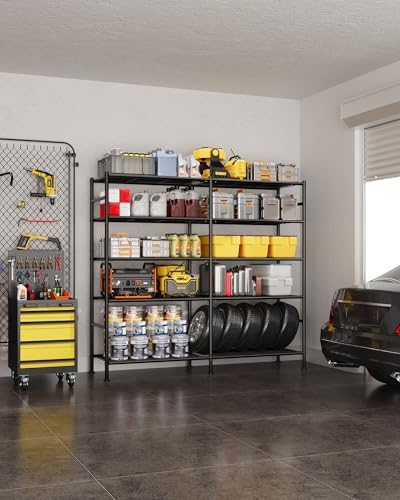
This is the shelf for the person who bought one cheap wire unit, watched it bow under their car care supplies, and wants to do it right this time. If your garage floor has any slope or imperfection (and it does — all concrete slabs do), the leveling feet alone are worth the upgrade. Five tiers give you serious vertical storage without eating more floor space than a 2-tier would.
It’s a smart pick if you’re moving from wall-mounted shelving and need freestanding capacity, or if you have a section of garage wall that doesn’t have accessible studs for wall-mount brackets. It complements rather than competes with overhead or wall solutions.
If you’re specifically interested in wall-mounted options, our review of garages with walls wasted on empty space covers the FLEXIMOUNTS bracket-mounted approach in detail. And for a broader look at what Sakugi’s existing garage shelving lineup offers, we cover the original shelving line that built their reputation — worth reading before you choose between models.
Better If / Skip This If
- Better if: your garage floor is uneven, you want freestanding storage, and the early-adopter risk feels acceptable because leveling feet and a wall anchor solve your actual pain.
- Skip this if: you would rather buy the model with more existing owner feedback. The original Sakugi garage storage shelves are the safer read-the-room option when review depth matters more than the newest hardware.
- Choose wall-mounted storage instead if: the goal is to clear the floor completely. The FLEXIMOUNTS wall shelf system is more work up front, but it gets bulky bins off the slab.
Our Pick: Sakugi 5-Tier Heavy Duty Garage Shelving
Leveling feet, wall anchors, and solid steel decking — the early-adopter pick that addresses everything cheap wire shelves get wrong.
Check Current Price on Amazon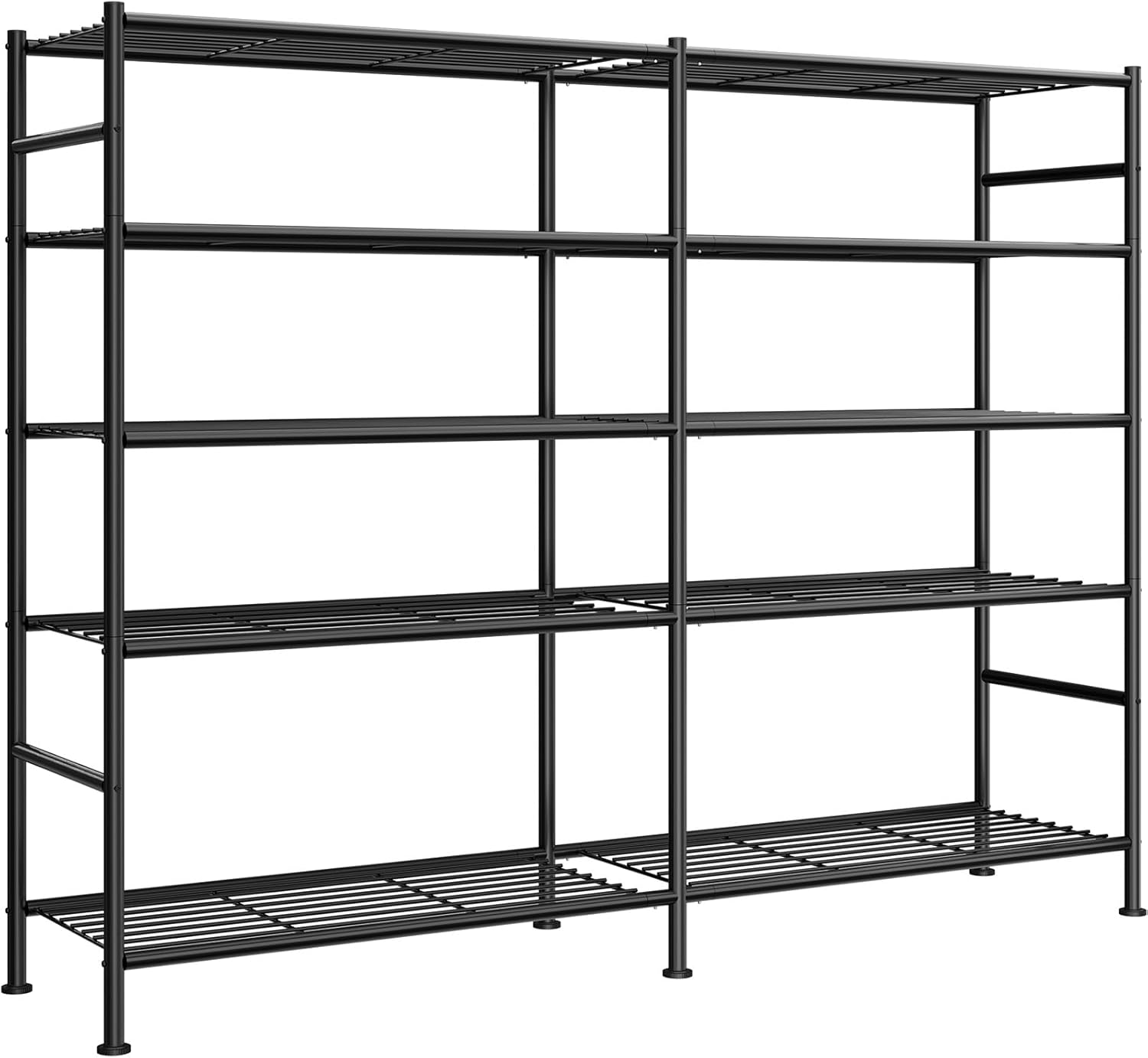
💡 When you set the leveling feet, don't just eyeball it — put a 4-foot level on each shelf after adjustment to verify. Garages often have a slight drain slope toward the door that's gradual enough to miss by eye but enough to make a tall shelving unit lean noticeably. Adjust one foot at a time and check both directions (front-to-back and side-to-side) before loading any weight.
Your Weekend Project: The Great Garage Shelf Replacement
Assembly is the gating factor on a project like this. Steel frame shelving typically uses bolt-together or snap-together construction — Sakugi’s units have been described by reviewers as reasonably straightforward to assemble with the included hardware, though having a mallet nearby for the snap-fit connections makes life easier.
Before you bring the new unit in, pull everything off the old wire shelf and sort it. This is the moment to be ruthless. You’re not going to reorganize bad storage — you’re going to load good storage with only things that should be there. Group by category: automotive, seasonal, sports, hardware/fasteners, lawn care. The shelf positions are adjustable, so set the tier heights based on your actual category heights before you start loading — tall items on the bottom two tiers, shorter bins on the upper three.
After you’ve loaded the shelves, attach the wall anchor strap. This is not optional. A 5-tier metal shelf fully loaded with 50+ pounds per shelf creates a significant tip hazard if a kid grabs a lower shelf to climb or if something shifts. The anti-tip strap takes two minutes to install and would prevent a genuinely dangerous situation.
Ready to fix this?
The Sakugi 5-Tier Heavy Duty Garage Shelving is the pick. One purchase, problem solved.
Check availability on Amazon →Frequently Asked Questions
How much weight can each shelf hold? The specific per-shelf capacity varies by configuration — check the current product listing for the exact rating, as capacity depends on how evenly weight is distributed and whether the unit is properly anchored. As a working rule: distribute weight across the full shelf surface rather than front-loading or center-loading any single tier.
Do leveling feet actually work on sloped garage floors? Yes, within their adjustment range — typically about an inch of variance. Most residential garage slabs fall within that range. If your floor has a dramatic slope (more than an inch across the footprint of the unit), you may need to shim with a rubber mat underneath before the leveling feet take over.
Is 29 reviews enough to trust this shelving? We’re transparent about this: 29 reviews is a thin dataset. The early feedback is positive and Sakugi’s track record with other products is solid, which is why we’re comfortable recommending it as an early-adopter pick. If you’d rather wait for a larger review base, check back in a few months. This is not a pick for someone who needs a proven product with years of durability data.
How does this compare to Sakugi’s other garage shelving? Sakugi’s existing line (which we review separately) has a strong track record. This 5-tier model appears to add leveling feet and wall anchor hardware as improvements over the base design — meaningful upgrades for garage use specifically. The core build quality appears consistent with the brand.
Does assembly require any tools beyond what’s included? A rubber mallet is helpful for snap-fit connections. A standard socket wrench may be useful for bolt-together joints depending on the configuration. Most reviewers complete assembly in under an hour. Have someone available to hold sections upright while you connect them — this is another project where a second pair of hands speeds things up meaningfully.
Full disclosure: As an Amazon Associate, we earn from qualifying purchases. Our recommendations are based on research, review analysis, and real household use only where explicitly noted. Commission rates play no role in what gets recommended — if a simple hardware-store fix beats a branded option, we'll say so.