laundry
Why Every Shirt in Your Drawer Looks Like You Slept in It (The Folder Board Fix)
Home Insight Hub is an Amazon Associate and earns from qualifying purchases. Read the full disclosure.
BoxLegend V3 Shirt Folder Board — a flat PP plastic board with hinged panels that folds shirts in four steps into consistent, same-size rectangles so stacks stop avalanching when you grab one tee. Fair warning: it's plastic — don't flex the panels at an angle or store it bent, or the hinges can crack. Listing checks on 2026-08-03 still show ASIN B077XV9VZG active (about 4.6★ from ~35,200 ratings; #1 Best Seller / Amazon's Choice in its slice; strong recent sales velocity).
Check if the BoxLegend V3 Shirt Folder Board is currently in stock on Amazon →
| Buy It For Life mindset | Everyday laundry pick | Hyper-Specific Fix | |
|---|---|---|---|
| Product | Premium folder board / store-style freestanding folder | BoxLegend V3 (this page) | Hand-fold only + shelf dividers |
| Better if | You want thicker hinges and will pay more per board | You want a cheap rigid template for batch folding tees | You already fold consistently and only need stack walls |
| Skip if | Budget is tight for a first trial | You hang every shirt and never use drawers | Soft knits still collapse even when folds match |
| Watch out | Higher cost; still a template, not an iron | PP hinges crack if twisted or stored bent | Doesn’t fix open-shelf avalanche alone |
| Cost position | Usually the premium hardware option | Usually the budget bulk-reviewed board | Free / already-owned tools |
Open your t-shirt drawer right now. If you’re like most people, there’s a semi-organized layer of clothing archaeology: the shirts you folded neatly on laundry day on top, the ones you’ve been pulling from the bottom for three weeks creating a crumple zone, and somewhere in the middle a few rogue shirts folded in a completely different orientation because you folded them on the bed instead of a flat surface.
The physics of a normal shirt drawer work against you. Shirts folded by hand — even carefully — come out slightly different widths and heights. When you stack them, the stack wobbles. When you pull one from the middle, the whole pile collapses inward like a textile landslide. You spend forty seconds excavating the gray v-neck and disturbing everything in a six-shirt radius.
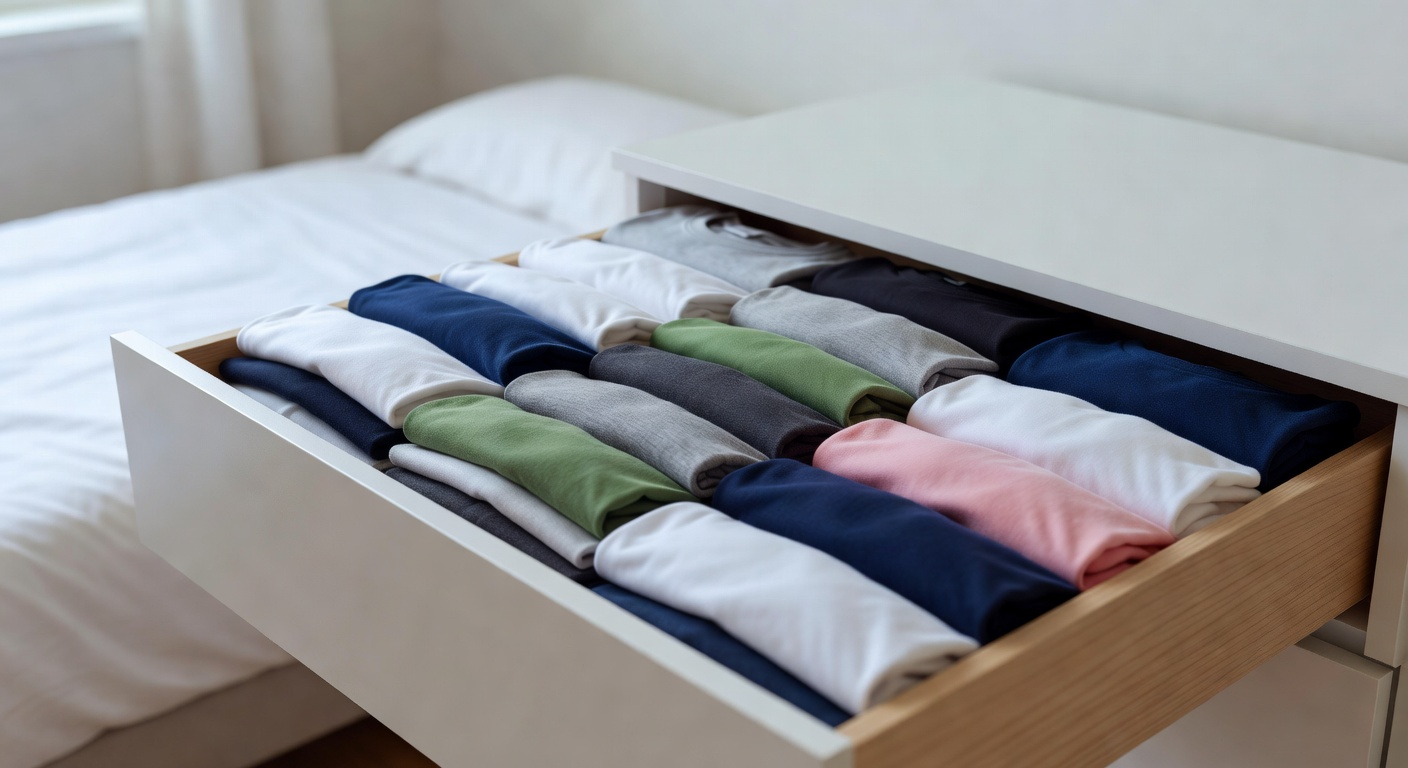
What you actually want is a drawer where finding a shirt doesn’t wreck the drawer. When shirts are the same width and folded to the same depth, they can stand on edge (file-fold style) or stack without the tower leaning. That is not a motivation poster — it’s geometry.
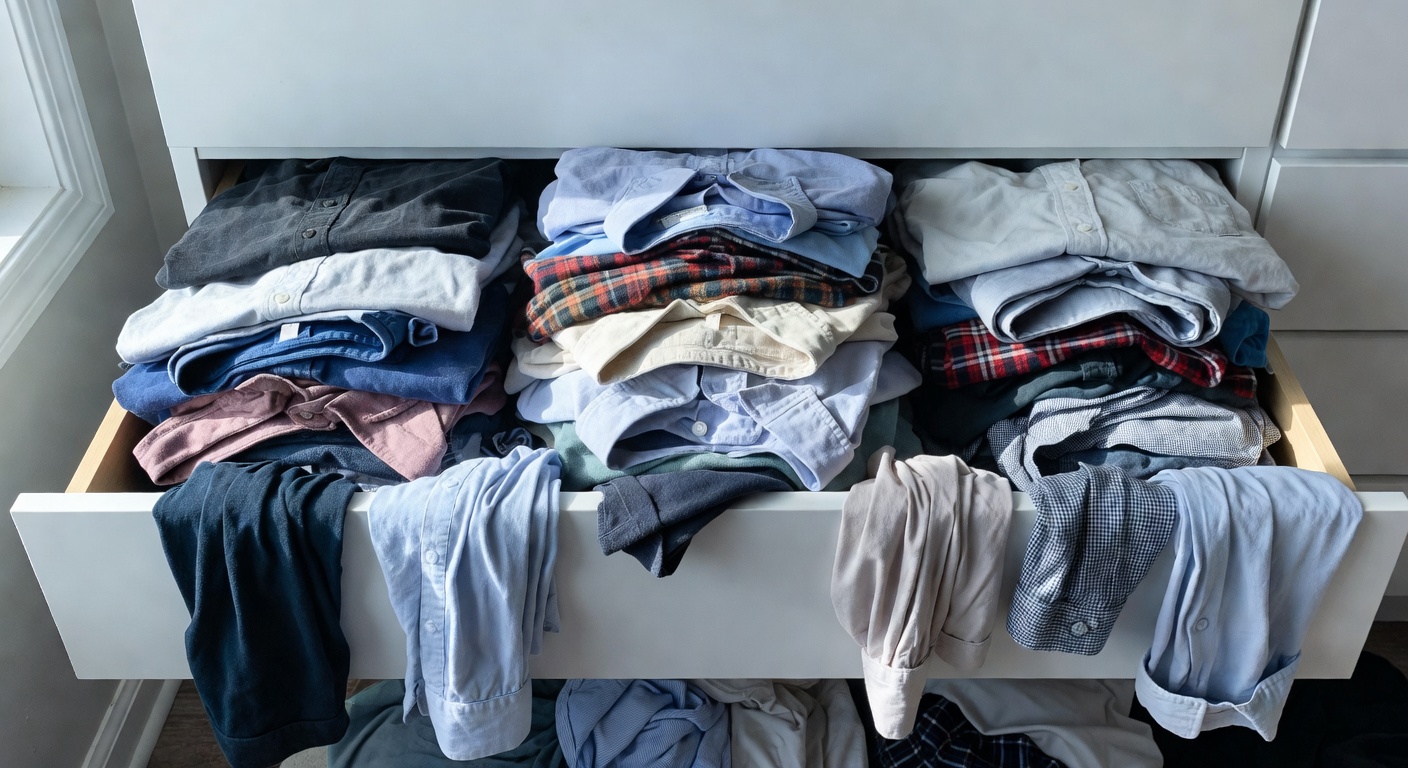
Why Hand-Folding Keeps Losing to the Avalanche
“Fold consistently” sounds easy until the shirt is floppy, the sleeves go wherever they want, and you have no hard reference edge. Mid-air arm-wrap folds look fine in isolation. In a full drawer they create a stack of slightly different footprints. Soft knits compress. Thick graphic tees bulge. One weird fold becomes the lean that starts the landslide.
A folder board does not iron, steam, or magically speed up folding for people who are already fast. It gives you a rigid template so every fold hits the same width. The consistency is the product. If open closet shelves are the real collapse zone (not the dresser drawer), start with the free 10-minute folded-clothes shelf reset before you buy hardware — shorter stacks and temporary dividers fix a surprising number of shelf avalanches without a board.
What Actually Works — BoxLegend V3 Shirt Folder Board
The flaw: It’s a piece of PP plastic with hinges — no motor, no shortcut that beats an already-efficient hand fold on raw speed. The material limitation is real: PP does not like aggressive flex or being stored bent. If you torque panels at an angle, force a twist, or jam the board into a packed gap while still partially open, hinges can crack. Fold straight, store flat or fully collapsed as designed, and review consensus says it holds up for normal laundry-day use.
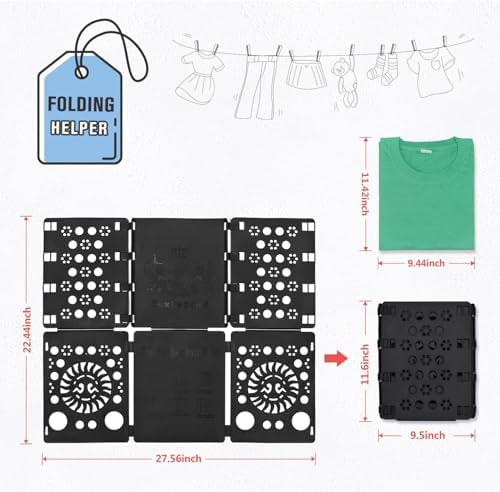
- Open size: about 27.56" × 22.44" (listing); thin board profile (~0.08")
- Collapsed storage: about 11.6" × 9.5"
- Weight: about 1.4 lbs
- Material: PP plastic hinged panels
- Typical use: t-shirts, polos, dress shirts; pants/towels as a width reference
- Listing check 2026-08-03: ASIN B077XV9VZG active; ~4.6★ / ~35,200 ratings; #1 Best Seller / Amazon's Choice badges on scrape; 4K+ bought in past month
BoxLegend V3 Shirt Folder Board
Four hinged steps to a same-size rectangle — batch-fold tees so the drawer stops avalanching when you grab one shirt.
Check if the BoxLegend V3 Shirt Folder Board is currently in stock on Amazon →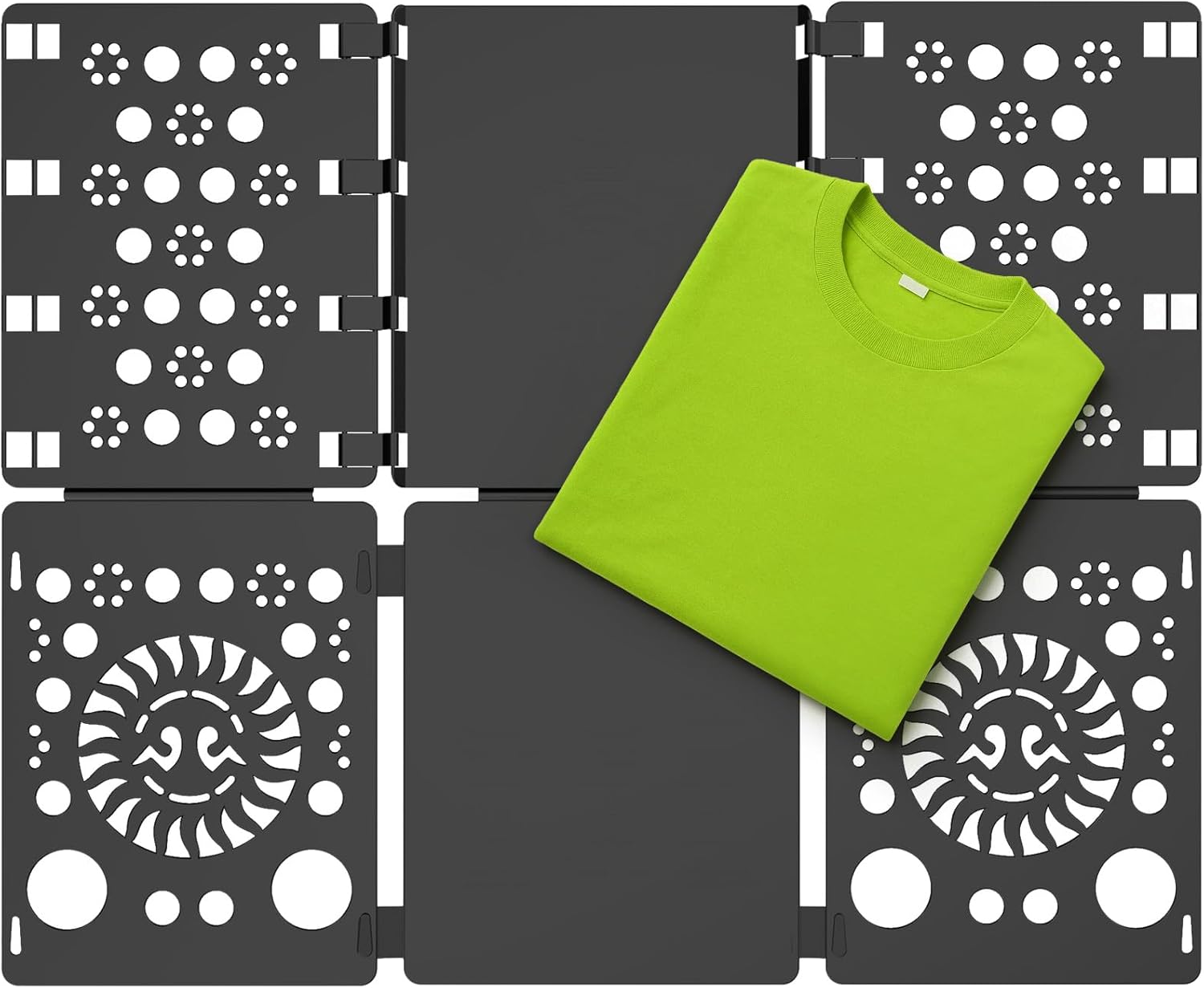
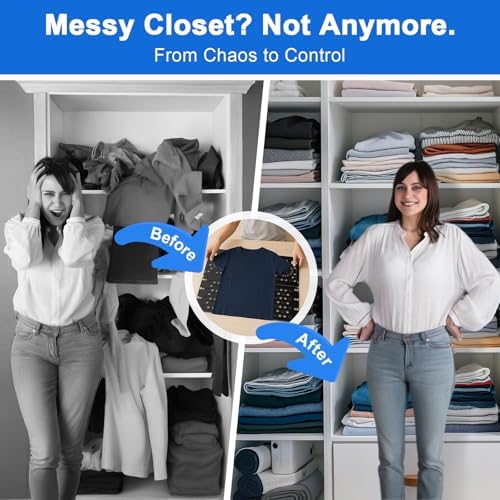
You place the shirt face-down, fold each panel in sequence, and pull off a neat rectangle. Because you’re folding against fixed edges, width and depth stay consistent whether you’re sharp at 10pm or halfway through a double load. The open footprint is large enough for most adult tees including many XL sizes; at 2XL+ very wide shirts may need a small manual sleeve tuck on the first fold — a minor adjustment, not a different product category.
Better if / skip if / choose instead
Better if: you fold laundry in batches (six or more shirts at a time), you use drawers for tees, and you care whether the drawer still looks usable ten days later.
Skip if: you hang everything — dress shirts, tees, all of it — or you genuinely live out of baskets and that system works. Organization hardware only pays off if you’ll use it every laundry day.
Choose shelf boundaries first if: the collapse is on an open closet shelf, not in a dresser. After the free shelf reset, open-front bins like SNSLXH stackable closet baskets give soft stacks side walls the board can’t provide on a deep shelf.
Choose staging first if: clean clothes die in a chair pile before they ever reach a drawer. A collapsible hamper landing zone near the fold surface often matters more than fold geometry.
The Alternatives
The “Buy It For Life” mindset
Thicker commercial or freestanding store-style folders cost more and can feel sturdier at the hinge. Worth it if you fold commercial volumes or hate replacing plastic. For a normal household drawer, the V3’s review volume is the practical signal that the cheap rigid template is enough.
The Renter-Friendly / low-commitment pick
The BoxLegend V3 is the low-risk trial: stores collapsed to roughly 11.6” × 9.5”, no install, no wall holes, and returns to a drawer or shelf when you’re done. That is the everyday laundry pick this page is about.
The Hyper-Specific Fix
If your folds are already consistent and shirts still fall over on a shelf, you don’t need a board — you need shorter stacks and physical dividers. Use the free shelf reset guide, then bins only if the test fails.
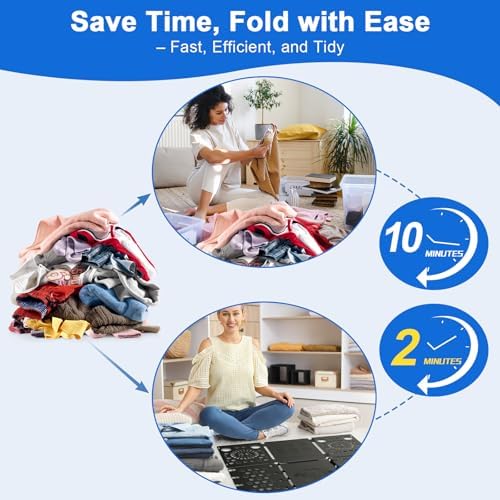
The board is most efficient when you fold a full stack at once. Pull from the dryer, clear a flat surface, run the four-step motion in a batch. The first five shirts feel slow; shirts six through twelve go faster once the sequence is automatic. Filing them vertically (or stacking identical rectangles) is what keeps the drawer usable between laundry days.
Your Next Step This Weekend
After analyzing the current listing signal and the long-running review pool (tens of thousands of ratings at ~4.6★ on the 2026-08-03 check — enough volume to see patterns, not a handful of opinions), the consistent theme is simple: people who use the board regularly end up with drawers they maintain, not drawers they tidy once and abandon. Consistency makes vertical filing and neat stacks practical. Speed bragging is mostly marketing.
Clear one tee drawer. Fold everything with the board. File or stack the identical rectangles. Leave it alone for ten days and see whether grab-one-shirt still causes a landslide. If the board never leaves the laundry basket after week two, you learned something cheaply — and you can still keep the free shelf habits from the folded-clothes guide.
If pre-wash sorting is the other half of laundry chaos, pair folding with a rolling sorter cart so dirty categories stop landing in one mixed mountain.
Ready to stop the shirt-drawer avalanche?
BoxLegend V3 Shirt Folder Board — four steps, same-size folds, stores flat when not in use.
Check if the BoxLegend V3 Shirt Folder Board is currently in stock on Amazon →Frequently Asked Questions
Does the BoxLegend shirt folder board actually save time folding?
It does not significantly speed up folding for people who are already efficient. Its value is consistency — every fold comes out the same size, so shirts stack or file without the drawer collapsing when you pull one item. The time you save is on the back end: finding shirts without wrecking the drawer.
Does the BoxLegend V3 work for larger shirt sizes like 2XL or 3XL?
The board opens to about 27.56” × 22.44” and handles most adult sizes including many XL shirts. At 2XL and above, sleeves may extend slightly past the panels on the first fold and need a small manual tuck, but the board remains usable.
Can the BoxLegend folder board fold things other than shirts?
Yes. Common uses include t-shirts, polos, and dress shirts. Pants and towels often use the board more as a width reference than a full wrap, but you still get a more consistent rectangle than freehand folding.
How do I prevent the BoxLegend board from cracking?
Fold the panels straight over as designed — avoid twisting or bending at angles. Store the board fully open and flat or fully collapsed. Do not force it into a tight gap while partially open.
Is a Best Seller badge in Laundry Sorters a meaningful quality signal?
Treat badges as secondary. The more useful signal is review volume and rating stability over time. Laundry Sorters is a broad category that includes carts and bags, so the badge is not a pure head-to-head against other folder boards.
Full disclosure: As an Amazon Associate, we earn from qualifying purchases. Our recommendations are based on research, review analysis, and real household use only where explicitly noted. Commission rates play no role in what gets recommended — if a simple hardware-store fix beats a branded option, we'll say so.